Uncategorized Archives - Page 8 of 10

Can You Straighten a Bunion Without Surgery? Advice On Bunion Corrector (Bunion Brace), Pads, Toe Spacers, Footwear & Bunions Exercises

Let’s say you’ve seen a bunion growing on your foot. It hurts and is making it hard for you to move around. Before you rush to get surgery, have you thought about whether there are other, less invasive ways to stop the pain and slow down the progression? The earlier you look into these options instead of surgery, the better they will work for you.

Some things, like using bunion correctors, doing certain exercises, or even switching your shoes, can stop it from getting worse and ease the pain. If you stick with these treatments, they might keep your bunions at bay, but their main purpose is to ease the pain and slow down the progression. 

How well do these methods really work, and could they be a good alternative to surgery for you? Even though they can help and should be part of your plan to deal with your bunion, they won’t get rid of it for good. 

Let’s talk about this some more so you can make an informed choice about what to do next and what kind of help you might need to deal with your bunions. We also tell you which product we think is the best in each category to help you on your way to treating your bunion without surgery

Understanding Bunions: Causes and Symptoms

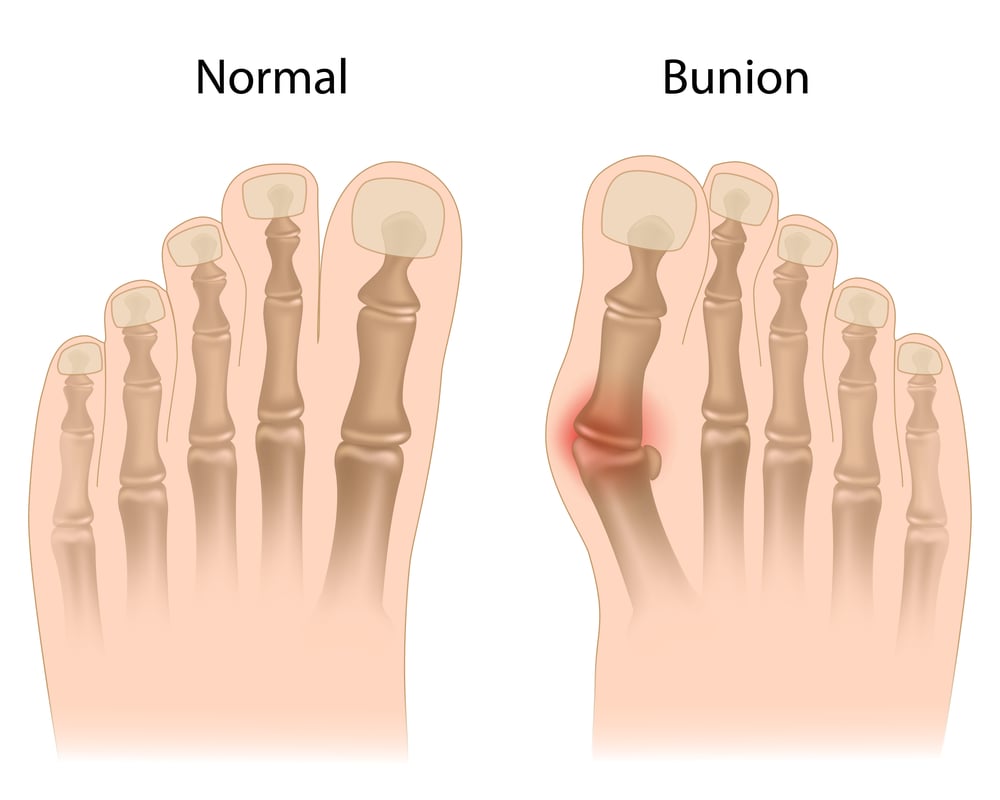
This is important to know about the causes and symptoms of bunions in order to fully understand how they work. Bunions, which are also called hallux valgus in medicine, are bony growths that show up at the base of your big toe.

That happens when your big toe starts to lean in towards your other toes, which moves it and makes a painful lump.

This condition can happen for many reasons, such as a genetic predisposition, arthritis, or even wearing tight, narrow shoes for a long time.

The signs of bunions are very noticeable and hard to ignore. There will be a bulging bump on the outside of your big toe, pain that won’t go away or comes and goes, and your big toe won’t be able to move as freely.

There may also be redness, swelling, or pain over the joint in your big toe. 
bunion corrector
The earlier you look into non-surgical treatments for your bunions, the more beneficial they will be. There may be rare cases where your podiatrist recommends surgical intervention for severe cases.

Non-Surgical Bunion Treatment Options

You can deal with your bunion pain without having to have surgery in a number of ways. You might want to look into a bunion corrector, gel pads or toe spacers which can help and maybe even slow the deformity’s progression.

1. Bunion Corrector

Bunion correctors are a non-surgical treatment option that can offer temporary relief from the pain and discomfort associated with bunions. These devices aim to reposition your big toe, reducing the pressure on the bunion.

Here’s how they work: 

If you have bunion pain, you might want to look into the KTSAY Bunion Corrector for Women and Men. It not only helps with pain but also gets great reviews for being comfortable and high-quality. It is made of high-quality, medical-grade materials, and 94% of users say it makes them feel more comfortable. Professionals and doctors trust this product, which proves its reliability.

Its design supports your hallux valgus during the day and at night, making it long-lasting and simple to wear. That means it will work with all of your shoes, even sneakers. Users have noticed that they can walk better and that their bunions don’t hurt as much. This product has been studied for years and is recommended by doctors to help with bunions. It’s light, washable, and made to be worn all the time. With reinforced elastane and multiple layers of stitching, it’s strong enough to last for a long time.

Best for: People with bunion pain who want a comfortable, easy-to-use solution that works with all shoes and gives them relief day and night.

Pros: This bunion corrector eases the pain and discomfort of bunions; 94% of users said they felt more comfortable after using it. It is made from medical-grade materials that are of high quality and are trusted by doctors and other professionals. You can wear it all day without taking it off because it is easy to use and fits all kinds of shoes.

Cons: It might need some time to break in, especially if you plan to wear it for a long time. 

The KTSAY Bunion Corrector for Women and Men

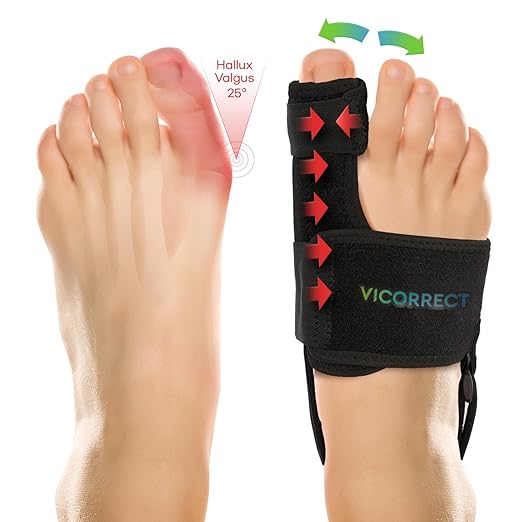
The Vicorrect Bunion Corrector is a great choice for both men and women who have bunions because it was expertly made to relieve pain and inflammation. If you have bunions, this corrector will gently move your toe back into place, which will slow their progression. The skin-friendly, breathable materials used in its construction will make you feel good while giving you 24-hour care.

The Vicorrect Bunion Corrector can be adjusted to fit shoe sizes 5–12 and has a strap that won’t slip to keep it in place. As a night splint, you can even wear it to bed to keep your arm supported all night. Users have said that the product is easy to use, comfortable, and works well, reporting that it stops bunions from forming and relieves pain. The Vicorrect Bunion Correctors are a good investment for your foot health. You can get both the left and right correctors in the same order.

Best for: People with bunions who want a comfortable and effective way to relieve pain and stop the condition from getting worse.

Pros: This bunion corrector can be adjusted to fit your body and is comfortable, so you can use it as a night splint in bed. Users have said that the product helped them get rid of pain and stop getting bunions. It comes with both left and right correctors, so it can fix all of your problems.

Cons: This bunion corrector might not fit shoe sizes that are too big or too small for people outside of the US 5–12 range. 
bunion corrector
Vicorrect Bunion Corrector for Women and Men

2. Bunion Gel Pads

Correctors can help for a short time, but bunion gel pads are another non-surgical option you might want to think about. These pads are made so that they cushion the area around your bunion, which takes away the pressure and friction that can hurt.

The soft, bendable material usually moulds to your foot shape and keeps your bunion from rubbing against your shoe. This can make everyday activities a lot less painful.

Plus, bunion gel pads can be worn with most shoe styles, can be used more than once, and are simple to clean. Don’t forget that you should talk to your doctor before starting any new treatment plan. Even though gel pads can’t fix a bunion, they can make it easier to live with. 

If you have bunion pain and are always on your feet, If you have bunion pain and are always on your feet, the Dr. Scholls Bunion Cushion with Hydrogel Technology can save your life. It will relieve shoe friction and pressure right away and all day. People love this clinically proven product for how comfortable it is and how well it works. On the other hand, some people had trouble keeping it in place and suggested using K-tape strips to help. The cushion can be used for more than one day and doesn’t get wet or sweaty. Because it’s thin and clear, you won’t even notice it’s there. A user said to be careful when taking off the pad to avoid irritating the skin. In case your toes aren’t lined up right, this cushion can also help. So, use the Dr. Scholls Bunion Cushion to take care of your feet. The best candidates are people who are always on their feet and have problems with bunions or misaligned toe knuckles. Pros: It relieves bunion pain right away and all day; it’s thin, flexible, and clear, so it’s easy to hide; it doesn’t get wet or sweaty, so it can be worn for more than one day. Cons: It might need extra support, like K-tape strips, to stay in place.”>Dr. Scholls Bunion Cushion with Hydrogel Technology can save your life. It will relieve shoe friction and pressure right away and all day. People love this clinically proven product for how comfortable it is and how well it works. On the other hand, some people had trouble keeping it in place and suggested using K-tape strips to help. The cushion can be used for more than one day and doesn’t get wet or sweaty. Because it’s thin and clear, you won’t even notice it’s there. A user said to be careful when taking off the pad to avoid irritating the skin. In case your toes aren’t lined up right, this cushion can also help. So, use the Dr. Scholls Bunion Cushion to take care of your feet. Best for: The best candidates are people who are always on their feet and have problems with bunions or misaligned toe knuckles. Pros: It relieves bunion pain right away and all day; it’s thin, flexible, and clear, so it’s easy to hide; it doesn’t get wet or sweaty, so it can be worn for more than one day. Cons: It might need extra support, like K-tape strips, to stay in place.
71s5TYaHe7L. AC SX300 SY300 QL70
Dr. Scholls Bunion Cushion with Hydrogel Technology

3. Bunion Toe Spacers

Toe spacers, which realign your toes and take pressure off of the bunion, are another non-surgical option you may want to look into for managing bunion pain. 

If you have bunion pain or toes that overlap, the ZenToes Gel Toe Separators are a lifesaver. Made of medical-grade gel and designed to be easy to use, they give you immediate relief. The soft, latex-free material will make you feel good, and the fact that you can wash and wear them again makes them even more appealing. Users say they work well to straighten the big toe and ease the pain of bunions.

Some users say it’s hard to find a comfortable fit, but once they do, it’s clear what a difference it makes. The separators can be worn during the day, at night, or even while recovering from surgery. They’re great for people who spend all day on their feet because you can wear them with or without bunion pads. If you take good care of these separators, they can help your foot problems for a long time.

Best for: People with bunion pain, overlapping toes, or who need to straighten their big toes; also good for people who are recovering from foot surgery or who spend a lot of time on their feet every day.

Pros: It eases the pain of a bunion right away and helps straighten the big toe. Made of medical-grade gel that doesn’t contain latex, so it’s comfortable and good for people with sensitive skin. The fact that it can be washed and used again makes it more long-lasting and useful.

Cons: Some users have said it was a bit tricky to get a good fit. 

71kcP43XNmL. AC SX679
ZenToes Gel Toe Separators

Having trouble with constant toe pain? With aloe vera and medical-grade mineral oil mixed in, the Welnove Gel Toe Separators might be the perfect answer for you. These separators can help you line up your toes, which will reduce friction and relieve pressure. Not only do they ease pain, but they also keep your skin moist, which makes them feel good as well as work.

The soft gel material is light and won’t irritate your skin, so it fits well. They can help with bunions, calluses, and toes that rub together. Plus, you can wash them and use them again, which makes them a good choice. Some users have noticed that it gets sticky after a while of use, but a quick wash or some powder can fix this. Most customers are happy and say their toe pain has gotten a lot better. So, try these out and take a step towards comfort.

Best For: People with foot pain from bunions, calluses, or toes that don’t fit together properly and want something comfortable and effective.

Pros: With aloe vera and medical-grade mineral oil mixed in, it soothes pain and moisturises the skin at the same time. made of soft, high-quality gel that is light and won’t irritate the skin. You can wash it and use it again and again. It can be used as a bunion spacer, hammertoe corrector, or toe corrector.

Cons: Some users have said that the separators get sticky after being used for a long time. 

61fnabyQVUL. AC SX679 PIbundle 12,TopRight,0,0
Welnove Gel Toe Separators

The Role of Footwear in Bunion Management

When it comes to shoes, it’s important to remember that the shoes you wear can have a big effect on how well you manage your bunions. The shoes you choose can either make your bunions hurt more or make them feel better. It’s important to know how important the right shoes are for managing your bunions.

When you have a bunion, shoes that don’t fit right can make the pain worse. Shoes with narrow toe boxes and high heels put extra pressure on the sides of your feet, which makes the misalignment of your big toe worse. Choosing shoes with plenty of room for your toes can help ease the pain.

When shopping for shoes, look for ones with a wide toe box, little to no heel, and good arch support. Shoes that fit well can keep your bunion from being put under unnecessary stress, which can ease your pain and slow its progression.

You could also try custom orthotics, which are shoe inserts that are made to fit your foot shape perfectly and offer extra support and cushioning, making bunion pain even better.

The WHITIN Wide Toe Box Barefoot Sneakers are a great choice for people with foot problems like bunions or neuromas because they have a lot of room for the toes and are designed to be comfortable. Customers like how easy they are to size and how well they fit, especially for long shifts. However, for long-term wear, you might need more cushioning.

The high quality and durability of these sneakers come from the sturdy canvas material that makes them. They’re also stylish and can be worn in a variety of settings. Because they’re light and flexible, they’re good for work and casual wear.

Best for: People with foot problems like bunions or neuromas, people who are switching to barefoot shoes, or anyone who wants a stylish, comfortable shoe with a wide toe box.

Pros: There is a lot of room for your toes, which is good for some foot conditions; the construction is high-quality and durable, and the canvas is strong; the design is flexible and lightweight, so it can be used for a variety of activities.

Cons: Some customers said they needed more padding for long-term comfort.

toe shoes part nail
WHITIN Wide Toe Box Barefoot Sneakers | Canvas Minimalist Shoes

Exercises for Pain Relief

Even though you can’t completely straighten a bunion without surgery, specific exercises can help a lot with the pain and discomfort that comes with it.

This non-invasive method can help make your feet stronger and more flexible, which can ease the pain of bunions and slow their progression.

We recommend that you add some simple exercises to your daily routine:

Lifestyle Changes to Prevent Progression

To effectively treat your bunion and stop it from getting worse, you should think about making some changes to your lifestyle that can help ease your pain and slow down the progression of this foot condition.

You’re not alone on this journey, and making a few changes can make a big difference.

Summing It Up...

It is possible to manage a bunion to reduce pain and significantly slow its progression without having surgery. You can effectively manage your bunion by using bunion correctors, toe spacers, the right shoes, as well as certain exercises and changes to your lifestyle. 

Just remember though, these useful tools are not a long-term cure and you will need to be diligent and consistent in using them if you are going to be successfully in managing your bunion’s progression.

It’s important to get advice from your podiatrist in order to put your best foot forward on this journey. Here’s to a healthier, pain-free stride without the surgery strife!

You don’t need to put up with Bunion pain any longer.  Call us today on (03) 9457 2336 or book online and let us get you back on your feet pain free and walking with confidence once again with our Bunion treatments.

Bunions

Understand what causes your bunions and what you can do about them such as using a bunion corrector. Find out what treatments can get you back to walking pain free so you can enjoy living an active life again!

operative management

How Do You Relieve Pain in Arch of Foot?

While the joy of a good run can be unparalleled, the subsequent throbbing in the arch of your foot certainly isn’t.

If you’re reading this blog, you’re likely seeking effective solutions to alleviate this discomfort, but with numerous methods claiming to be the ‘best’, it can be quite baffling to decide which one to adopt.

There are a wide range of options, from home remedies like ice application and foot exercises to medical interventions like orthotics.

So, if that sounds interesting to you, please read on and let’s discuss the most efficient strategies for foot arch pain relief.

Understanding Foot and Arch Pain

Understanding foot arch pain begins with recognising that your foot arch, comprising ligaments, tendons, and bones, plays an essential role in weight-bearing and stabilising movements. 

Feeling pain in the arch of your foot can disrupt these functions, leading to discomfort and mobility issues.

Often, a sore heel accompanies the pain in the arch of the foot, making daily activities challenging. We see people with this kind of pain every week in our clinic, and we understand that you’re not alone in your experience. Many others around the world also share your struggle, with their daily routines impacted by foot arch pain.

While trauma and injuries can cause foot arch pain, it’s crucial to note that structural issues like high or low arches also play a part. Overuse, such as running or other strenuous activities, can also make your foot’s arch painful.

There can be many reasons for your foot arch pain - the biomechanical structure of your foot, and their arches, can play a part - but you need an experienced podiatrist to accurately determine the root cause for a tailored and effective treatment plan to be put in place.

Common Causes of Arch Pain

Understanding the root cause of your arch pain is an essential step towards effective treatment. Let’s delve deeper into these causes and discuss their impact on your foot health.

Identifying Arch Pain Causes

You’ll often find that common causes of arch pain are plantar fasciitis, flat feet, high arches, and overpronation.

But that’s not all. Bunions, hammertoes, and plantar plate injuries resulting from structural issues can also cause discomfort.

Overuse, ageing, stress, weight gain, and unsupportive shoes further contribute to arch pain. You may feel pain, tenderness, mild swelling, and heat in your foot’s arch, with the discomfort worsening when you walk.

Importantly, relief often comes when you rest. Identifying the root cause of arch pain is essential; we cannot stress that enough. It’s the first crucial step towards an effective treatment plan and relief from the pain that’s hindering your daily life.

Understanding Plantar Fasciitis

As mentioned, if you’re experiencing arch pain, it could be due to plantar fasciitis, a common condition that particularly affects women between the ages of 40 and 60.

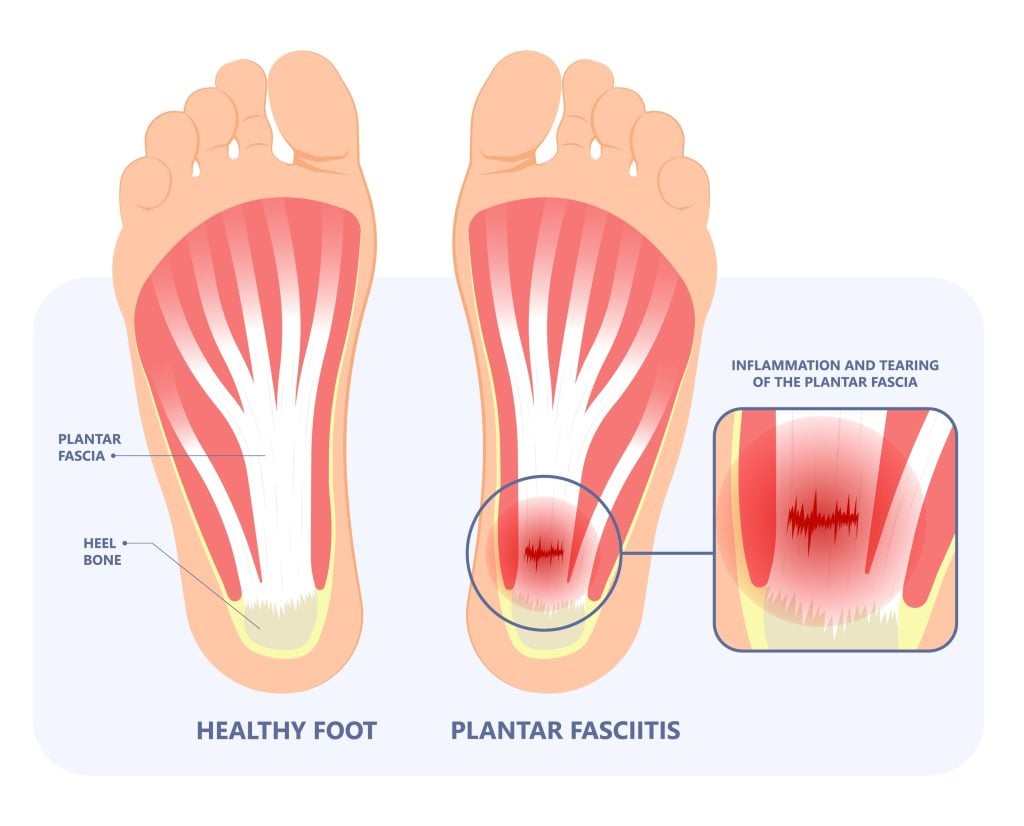
This condition involves inflammation of the plantar fascia, a thick band of tissue that runs across the bottom of your foot, connecting your heel bone to your toes, and as one of the main causes of foot arch pain, it deserves its own section of discussion in this blog.

Understanding the causes and symptoms can help you manage the pain.

  • Overuse, high-impact activities, or flat feet can increase your risk.
  • A stabbing pain in your heel or arch, especially in the morning, is a common symptom.
  • Consistent rest and stretching exercises can offer relief.
  • We might recommend custom orthotics or physical therapy.
  • In severe cases, cortisone injections or surgery may be considered.
An inflamed plantar fascia will stop you from doing the things you enjoy in life. Getting an accurate diagnosis is crucial to resolving the pain once and for all.

Impact of Footwear Choice

Your choice of footwear, particularly if it lacks proper cushioning or arch support, can also be the root cause of arch pain.

Unsuitable shoes like high heels, flip-flops, or worn-out footwear can exacerbate pain by straining ligaments and tendons in your foot.

Selecting the correct shoes is vital for preventing arch pain, particularly if you have flat feet, high arches, or foot abnormalities.

Shoes with robust arch support and cushioning that can relieve pressure on your foot’s arch would be a good choice. 

Investing in supportive shoes designed for specific foot types can greatly reduce arch pain, improve overall foot comfort, and contribute to your foot health.

Another smart choice is buying a quality pair of insoles to give your arches the extra support they need.  

Rather than buying a new pair of shoes, you can test out off the shelf plantar fasciitis insoles and see what kind of pain relief you get.  

A cheaper option that we have a lot of success prescribing to our patients in our clinic.

Your feet deserve the best care, and it begins with the right pair of shoes or off the shelf inserts.

Adding a quality pair o podiatrist recommended insoles to your shoes can give your arches the support they need to relieve pain and restore mobility.

Effective Home Remedies for Foot Arch Pain

With a few simple remedies, you can manage pain in your foot’s arch at home. They aren’t always successful, depending on your specific conditions, but they are definitely worth trying.

Rest and Ice Application

Two of the most effective home remedies for relieving pain in the foot are resting the affected area and applying ice regularly. These treatments are simple, accessible, and beneficial for anyone dealing with discomfort.

Here’s what you need to remember:

This way, you’re not just managing pain; you’re actively contributing to your foot’s recovery.

Over-the-Counter Medications

While rest and ice application greatly alleviate arch pain, over-the-counter medications are another effective home remedy. Drugs like ibuprofen or acetaminophen, which are easily accessible at pharmacies, can reduce pain and inflammation in your arch – but must only be used as a short-term remedy.  If the pain does not go away once the medication wears off, you need to seek another treatment option.

It’s important to follow the instructions on the packaging and not exceed the recommended dosage. If your pain persists or worsens, don’t ignore it. Consult a healthcare provider for further guidance.

Targeted Stretching Exercises

Targeted stretching exercises serve as an effective home remedy for relieving arch pain, as they specifically aim to stretch the plantar fascia and surrounding muscles. By incorporating these exercises into your daily routine, you can manage your discomfort and prevent further strain.

Here are five key exercises that you should consider (check out our other blog on plantar fascia stretches and exercises for more details):

Podiatrist Treatments for Arch Pain

When home remedies don’t provide the relief you need, it’s time to explore professional treatments for arch pain. A podiatrist can offer interventions such as custom orthotics, non-surgical options, and a range of other treatments tailored to your needs.

Understanding these treatments and how they can alleviate your pain is vital in your journey towards comfort and recovery.

Understanding Podiatrist Interventions

In order to effectively manage arch pain, you may want to explore podiatrist interventions, which encompass a variety of specialised treatments tailored to your specific needs.

Podiatrists are foot care specialists who understand the complexity of foot mechanics and can provide both relief and long-term solutions for arch pain.

Here are a few podiatrist interventions that are worth considering:

Orthotic Devices for Relief

Podiatrists often recommend custom-made orthotics, such as arch supports, to correct foot biomechanics. 

They help address issues like overpronation, flat feet, or high arches that may contribute to your pain.

By evenly distributing pressure across your foot, these devices can lessen strain on the arch and alleviate discomfort. 

Your foot structure and gait pattern personalise them, ensuring perfect support and pain relief.

With a correctly fitted orthotic device, you can improve your foot function, reduce pain, and even prevent future injuries.

podiatry melbourne symptoms
Orthotic therapy is an effective form of treatment for ball of foot pain. Re-distributing bodyweight taking pressure off the injured area of the foot.

Preventing Future Arch Pain

Maintaining healthy feet is an important ongoing endevour for any of us wanting to avoid or prevent the occurence of foot arch pain.  Click on each of the headings below for valuable tips and advice on how to avoid and prevent potential future instances of foot arch pain.

Arch Support

To ward off future arch pain, it’s important to take preventative measures, one of which includes wearing supportive shoes with proper arch support to provide stability and cushioning. This will help your feet maintain their natural shape, reducing undue stress on your arch.

Stretching & Strengthening Exercises

Moreover, you should consider incorporating regular stretching and strengthening exercises for your feet and calves into your routine. This can help you improve flexibility, enhance muscle strength, and ultimately lessen the likelihood of developing arch pain.

Custom Made Orthotics

Orthotic inserts or custom-made orthotics can also be a game-changer. They correct imbalances and prevent excessive stress on your arch, which can be a significant factor in arch pain. If you’re someone who frequently experiences discomfort, it’s worth talking to a podiatrist about this option.

Maintain Healthy Weight

Your weight also has an impact on foot health. Maintaining a healthy weight decreases pressure on your feet and, consequently, reduces the risk of arch pain. Remember, a balanced diet and regular exercise are key.

Avoid High Impact Sports

Lastly, be mindful of your physical activities. Avoid high-impact sports, and gradually increase intensity to protect your arch from overuse injuries and strain. Proactive measures like these can help you avoid future arch pain.

Summing Up Foot Arch Pain...

Protecting your painful arches with patience and proper precautions can provide profound relief. Prioritise pain management with rest, ice, and over-the-counter pain pills as a short-term solution only. If the pain persists, you need to look into other treatment options.

Practice relevant stretches and select supportive shoes to protect your arches and prevent further problems. Still dealing with persistent pain? Then a podiatrist might propose custom orthotics. If rest, ice, over-the-counter medications, and stretches aren’t working, then it’s definitely time to consult an experienced podiatrist in the area of foot arch pain.

Understanding, treating, and preventing arch pain enables you to perform at your best, pain-free. You don’t need to put up with it any longer; there are many effective treatment options available.

If you want the right professional advice on how to treat your heel pain, we currently have a limited offer running to help you out. For just $79 (usually valued at $189), book in online for our Complete Heel Pain Assessment & Treatment Consultation will get:

  • Complete In-Depth Heel Pain Examination
  • Review of Footwear & Personal Habit Diagnosis
  • Treadmill Walking Gait Analysis & Video Assessment
  • Complete Foot & Ankle Structural Diagnosis
  • Effective Heel Pain Treatment Plan To Get You Walking Pain Free
  • Peace of Mind You Know What Is Causing Your Heel Pain & How To Fix It
Check out our eBook below for further details on this special offer as well as other tips and techniques you can try at home to manage your plantar fasciitis and heel pain.

Ignoring heel pain or plantar fasciitis never cures it and your situation will likely get worse the longer you leave it.   

Take control today by booking in online or call us today on (03) 9457 2336 to see one of our podiatrists and get this issue sorted once and for all.

Heel / Foot Arch Pain

Understand what causes your heel pain and what you can do to get rid of it once and for all. Find out what treatments can get you back to walking pain free so you can enjoy living an active life again!
plantar fasciitis treatments best arch support insoles for plantar fasciitis

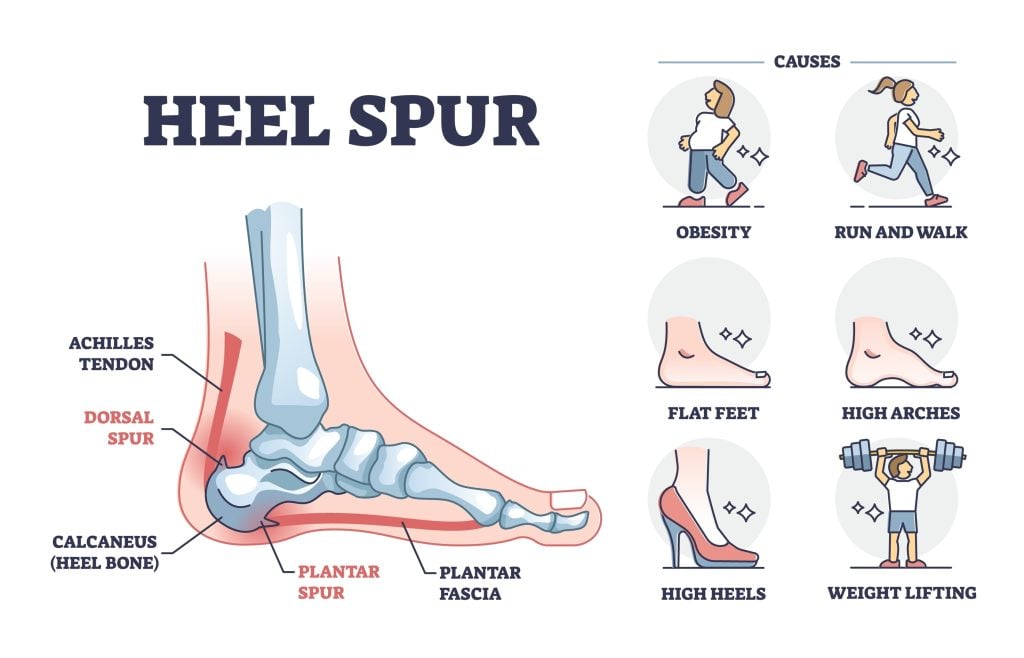
Can a Heel Spur Go Away On Its Own? | Heel Spur Treatment

If you have recently been diagnosed with a heel spur (or suspect you may have one) then you’ve probably wondered if that nagging pain will disappear on its own. It’s a common question, especially when you’re dealing with the persistent discomfort they often bring. 

For the uninitiated, heel spurs are bony growths that form due to constant strain and inflammation, so they typically don’t just vanish without intervention unfortunately – but it’s not all bad news, there are a number of treatment options available.

But what kind of treatments are effective? And are there ways to prevent heel spurs from developing in the first place? Let’s explore this further in our latest blog.

Understanding Heel Spurs

While you may hope that a heel spur will disappear on its own, it’s important to understand that these bony protrusions typically require targeted treatment due to their nature and the long-term strain and inflammation that often cause them. 

As they’re typically caused by long-term strain and inflammation, they don’t just vanish spontaneously.

You’re not alone in this, as many individuals experience a similar journey.

Many do find lasting relief with the treatment options discussed in this blog, but as you will see, an accurate diagnosis of the root cause is crucial for ongoing pain relief.

Heel spurs form over an extended period of time with inflammation to the plantar fascia. The sooner you have heel spurs looked at by a professional, the easier and faster they can be resolved.

Even though some heel spurs may be asymptomatic, the pain and discomfort can persist without intervention. This is why it’s essential to consult with a podiatrist for proper diagnosis and personalised treatment recommendations. Your journey to recovery may be unique, but it’s important to remember that tailored treatment options focus on managing your specific symptoms and addressing your underlying root cause of the heel spur so they don’t come back.

Causes and Symptoms of a Heel Spur & Plantar Fasciitis

Understanding the causes and symptoms of heel spurs is essential in managing this condition effectively. As mentioned, heel spurs don’t typically go away on their own. They’re usually a result of long-term strain and damage to the plantar fascia, the tissue connecting your heel bone to your toes, and the heel bone itself. Chronic inflammation and strain on these foot ligaments contribute to the development of heel spurs.

Over time, a build-up of calcium deposits forms on your heel bone, leading to the bony protrusions known as heel spurs. This isn’t a process you’ll feel overnight. It happens gradually, over many months.

When it comes to symptoms, the most telltale sign is a sharp, stabbing pain under your heel. This pain is often worse in the morning when you first wake up or after long periods of rest. As you start moving, the pain might decrease, but it can return after standing or walking for extended periods.

Managing heel spurs involves various conservative treatments, such as rest, ice, stretching exercises, and supportive footwear. Always consult with a podiatrist for personalised treatment recommendations that address the root cause of your heel spur.

Diagnosis of a Heel Spur

How do healthcare professionals diagnose heel spurs? The process a podiatrist will follow is detailed and thorough so that your symptoms are accurately linked to this common foot condition.

This detailed approach ensures that your treatment plan will address your heel spur and its symptoms effectively.

Effective Heel Spur Treatments

Despite heel spurs not typically resolving on their own, there are effective treatments that can manage the pain and prevent further damage. You don’t have to suffer in silence; you can take action to alleviate the discomfort (click the below tabs to learn more).

Rest & Ice for Heel Pain

One of the most important treatments is rest. It’s vital to give your feet time to heal—pushing through the pain can exacerbate the condition. Applying ice to your heel can also reduce inflammation and provide temporary relief.

Stretching exercises are another helpful strategy. They can ease the tension in your plantar fascia, providing relief from the pressure that exacerbates heel spur pain. Your podiatrist can guide you to specific exercises tailored to your needs.

Orthotic shoe inserts, too, can provide much-needed support to your feet, redistributing pressure and reducing the strain on your heel.

In more severe cases, shockwave therapy might be necessary. This non-invasive treatment can alleviate the pain and inflammation associated with heel spurs.

Prevention of Heel Spur Risk

While heel spurs can’t always be avoided, there are actionable steps you can take to greatly reduce your risk of developing them. Prevention is always better than cure, and with heel spurs, it’s no different. Understanding how to take control of your foot health can go a long way in ensuring your comfort and mobility.

Here are four key steps to help you prevent the development of heel spurs (click the below tabs to learn more):

Invest in supportive shoes with good arch support. Avoiding ill-fitting or uncomfortable shoes can save you from unnecessary foot problems, including heel spurs.

Maintain a healthy weight. Excess weight puts additional pressure on your feet and heels, increasing the risk of heel spurs.

Incorporate regular stretching exercises for your calf muscles and plantar fascia. This can help keep these areas flexible and less prone to inflammation and strain.

If needed, consider using orthotic inserts or custom-made shoe inserts. These can provide additional support and cushioning to your feet, further preventing heel spurs.

Summing It All Up...

Basically, heel spurs won’t just pack their bags and leave on their own. They’re stubborn tenants caused by long-term strain and inflammation.

Consult your podiatrist for a proper eviction plan, which could involve rest, ice, stretching, or orthotics (or a number of other effective treatment options we have discussed in this blog).

Remember, prevention is the best solution for this problem, so take care of your feet to keep these unwelcome intruders at bay.

If you want the right professional advice on how to treat your heel spurs, we currently have a limited offer running to help you out. For just $79 (usually valued at $189), book in online for our Complete Heel Pain Assessment & Treatment Consultation will get:

  • Complete In-Depth Heel Pain Examination
  • Review of Footwear & Personal Habit Diagnosis
  • Treadmill Walking Gait Analysis & Video Assessment
  • Complete Foot & Ankle Structural Diagnosis
  • Effective Heel Pain Treatment Plan To Get You Walking Pain Free
  • Peace of Mind You Know What Is Causing Your Heel Pain & How To Fix It
Check out our eBook below for details on this special offer as well as other tips and techniques you can try at home to manage your heel pain.

Heel Spurs & Plantar Fasciitis

Understand what causes your heel pain and what you can do to get rid of it once and for all. Find out what treatments can get you back to walking pain free so you can enjoy living an active life again!

plantar fasciitis treatments best arch support insoles for plantar fasciitis

The 4 Best “Off The Shelf” Plantar Fasciitis Insoles and How To Pick The Orthotic For You

Plantar fasciitis is a common foot condition that many people suffer from. Despite its prevalence, it can be managed with shoe inserts in many cases. If you’re looking to try self-managing your plantar fasciitis with some insoles to see if they resolve your heel pain, then this blog is for you.

In this blog we will present our picks for the best “off the shelf” insoles as:

They are all unique on their own and accommodate customisation of fit and shock absorption among other features. But how do you choose the right ones for you and your specific situation?

Don’t worry, we will give you an overview of who each plantar fasciitis insoles are best suited for, and what are the key factors in making a decision as to which plantar fasciitis insoles are right for you after we discuss our top four picks.

Let’s get into it.

Our Four Recommendations Are...

To aid those who experience discomfort related to plantar fasciitis often find themselves relying on Dr. Scholl’s Plantar Fasciitis Pain Relief Support as a go-to solution because it offers instant relief through targeted arch and heel support.

Patented design targets painful pressure reduction and users have experienced significant improvements especially if they are required to stand or run long distances.

It doesn’t matter if you don’t get the exactly the right fit; you can trim the inserts to match your unique foot shape. They are designed so that they can fit different sizes of shoes making them more versatile.

Best For: Immediate relief desired by people with plantar fasciitis and those who stand for long stretches of time or regularly run or any other physical activity.

Pros:

  • Targeted arch and heel support that offers instant relief.
  • The ability to customise the fit as per the user’s unique foot shape.
  • Numerous positive reviews from users who got substantial pain relief and saw improved mobility.

Cons:

  • The inserts may not offer sufficient support when worn in all types of shoes. 

When one is looking for an effective way to deal with persistent leg pain and plantar fasciitis, they need to consider PROFOOT Orthotic Insoles. Their full-length arch supports which are patented provide whole support of the plantar fascia as well as gel heel insert to absorb shock.

Co-created by a family-owned business aiming at reducing stress on your feet, these insoles were designed specifically to alleviate discomfort in your heels and foot.

Well-cushioned, rigidly arched supportive insoles coupled with shock absorbing soft gel under the heel give long lasting relief as they claim their efficacy based on user reports regarding increased mobility and decreases in pain even after spending a whole day walking or running around.

Best for: Conditions such as; plantar fasciitis, heel pain or general foot discomfort where individuals spend most of their day standing or walking around.

Pros:

  • Patented orthotic design
  • Provides relief from plantar fasciitis, heel pain
  • Gel heel insert for shock absorption.
  • Supports the whole width of the plantar fascia
  • Can be worn for long hours
  • Affordable and highly recommended by users for its effectiveness in improving mobility and reducing pain.

Cons:

  • May take a while to adjust to them before becoming comfortable.

If you are dealing with plantar fasciitis discomfort or are looking for efficient arch support for flat feet then you should consider getting yourself a pair of WalkHero Plantar Fasciitis Feet Insoles Arch Supports Orthotics Inserts.

These insoles have been designed to be used on a daily basis hence providing a moderate control and support for your feet. 

They have deep heel cup that ensures your feet are always in correct position while their premium EVA material absorbs any kind of shock protecting your feet from more damage.

These inserts also breathe well and can last long when well taken care of. 

Some people find it easy to use but there is also an opinion that it is awesome as far as plantar fasciitis foot ache is concerned; what’s more this purchase doesn’t require taking risks because the company gives customer service that will help you during all the time.

Best For: People suffering from plantar fasciitis or having flatfeet requiring extra arch support.

Pros:

  • Instant comfort and pain relief provided
  • Deep heel cup holds the foot in the right place Premium EVA material – absorbs shock
  • Durable and breathable for long term use.

Cons:

  • May need time to get used to before they become comfortable.

Are you experiencing any type of burning, stabbing foot pain or aching heel? 

Then here come PROFOOT Orthotic Insoles that are meant for men’s sizes 8-13; this can be your best option because it will give you a longer relief plus quality support.

These inserts have gel heel shock-absorption and plantar fasciitis support across whole sole in order to help relieve pain and stress.

PROFOOT, a family owned company established in 1986 is renowned for taking care of foot related challenges like these through products such as these inserts. 

They have been highly commended by reviewers who appreciate their comfort, durability as well as efficiency during different activities and types of shoes.

Best For: Men who have plantar fasciitis or heel pain with shoe sizes between eight and thirteen.

Pros:

  • Long-lasting relief from heel pain
  • Features gel heel shock absorption and support for entire plantar fascia
  • Highly recommended for comfort, durability, and effectiveness

Cons:

  • There may not be smaller men’s size than 8

Things To Remember...

Key Factors To Assess Your Plantar Fasciitis Insole

Insoles should be durable and comfortable enough for daily use, offering moderate control and support to effectively manage the symptoms. Besides this, ones that can be adjusted so as to fit your individual foot shape for maximum comfort are the best insoles.

If none of the above recommendations meet your requirements, then please be sure to read the following sections on what factors are important when selecting a pair of plantar fasciitis insoles for yourself (click on each of the tabs to learn more).

For someone with plantar fasciitis, it is important to know the material of his or her insole so as to choose the right one. Comfortable and supportive, EVA materials absorb shock and provide cushioning.

Thus, memory foam insoles mold into any foot type providing personalized cushioning with a reduction of pressure points. Polyurethane insoles last long due to their durability.

Gel insoles are highly recommended thanks to their superior absorption of shocks as well as reduced heel and arch pressure which makes them suitable for relieving plantar fasciitis pain. Lastly, cork insoles naturally support the feet by wicking away moisture leading to healthy foot environment.

This means that the size of your insole matters together with its adjustability when it comes to comfort and support needed for relief from plantar fasciitis pains. In selecting an insole, size is a significant factor. Therefore, finding a perfect match on your feet is very important since it helps relieve discomfort and enhance comfort.

The next thing you need to check after sizing is whether there are any adjustment options provided on these products. Some types have cuttable portions allowing you personalise your pair according your foot specifications. This adjustment further enhances support while reducing pain by promoting proper alignment of feet.

Don’t ever choose plantar fasciitis shoes without considering how long they will last because durability matters too much hereby; hence look at the quality of materials used like EVA foam or medical-grade silicone among others that has shown proven durability ability over time. Also look out for ones with reinforced stitching or sturdy construction so that they can last for long even when you wear them daily.

It is important to assess the arch and heel support that will maintain this structure and effectiveness over time. Additionally, warranties or guarantees from manufacturers should not be left out. This ensures both product durability and customer satisfaction commitment on their part.

Lastly, use user reviews and feedback to gauge durability under various conditions and make an informed decision.

How do you get the best value for your money when shopping for plantar fasciitis insoles?

Begin by comparing prices across varying brands. Affordable yet of good quality. Look at what materials are used in their construction; how durable are they? Are they reasonably priced? Analyse the features that come along with every pair of such shoes as compared with its cost implications.

Does a slightly more expensive pair offer significantly more support or comfort? Check if there are any offers, terms, or guarantees provided by these companies. They improve its long-term value proposition while enabling potential savings on costs. Remember it is not just about the cheapest price but also getting maximum benefit at minimum cost.

So then what particular demands do people need to look into before picking out insoles for plantar fasciitis?

Firstly, determine your level of arch support required. Its extent depends on how serious your problem is and it is important for right foot alignment giving some relief.

Secondly, choose ones with deep heel cups. These help stabilize your heel while offering better cushioning hence reducing pressure points or pain experienced therein.

Also check out the materials used. For instance, if one has sensitive or painful feet he ought to buy something that provides shock absorption, durability, and comfort among other valuable attributes. If trimmable designs are available making it possible to have a customised fit then it’ll be better

Besides, buy insoles that will give you support for a long time. This will help relieve the symptoms of plantar fasciitis which lasts over some time.

Summing It All Up...

So you have got plantar fasciitis and need relief? Hopefully you have found this blog useful if you’re looking to test out a quality pair of plantar fasciitis insoles.

Consider Dr. Scholl’s Plantar Fasciitis Pain Relief Support, PROFOOT Orthotic Insoles, and Plantar Fasciitis Feet Insoles Arch Supports Orthotics Inserts.

These provide targeted support, shock absorption and foot alignment for immediate relief and long-term comfort.

Take note about fit, heel cups, and gel inserts.

With the right insoles, you can be back on your feet quickly.

Heel Pain & Plantar Fasciitis

Understand what causes your heel pain and what you can do to get rid of it once and for all. Find out what treatments can get you back to walking pain free so you can enjoy living an active life again!

plantar fasciitis treatments best arch support insoles for plantar fasciitis

Ingrown Toenail Surgery: An Overview Of The Procedure, Cost, Recovery, and Risks

Understanding Ingrown Toenails & Cost of Surgery

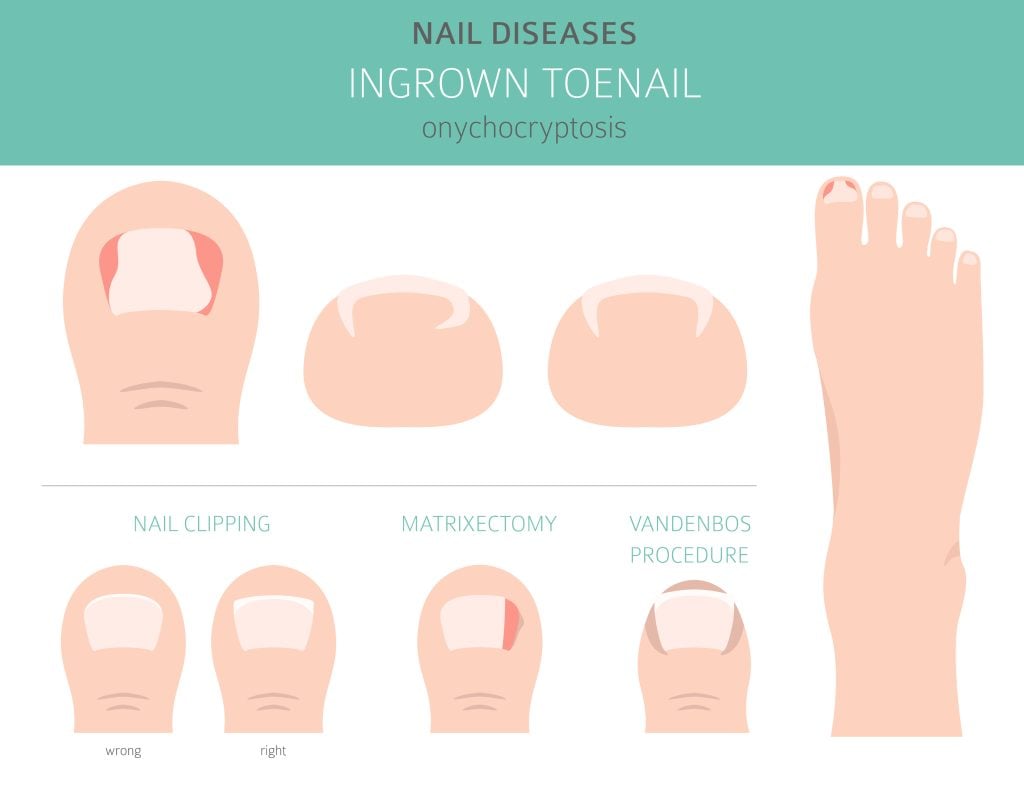
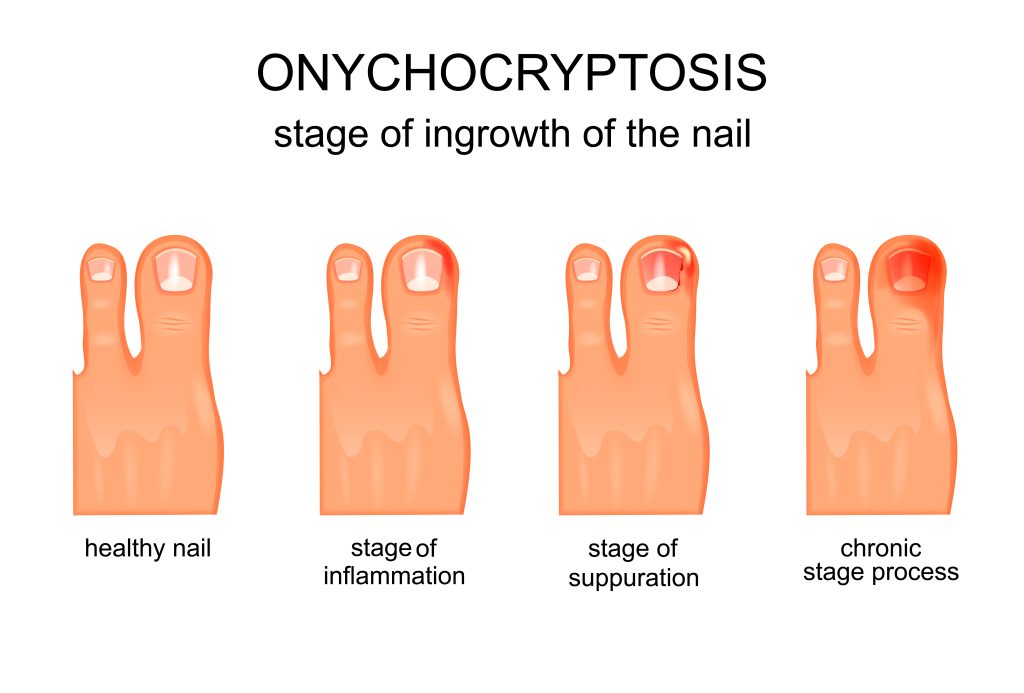
In discussing the topic of ingrown toenails, it’s essential to understand that they occur when the edge of your toenail grows into the surrounding skin, causing pain and potentially leading to an infection. 

This is a common issue that an experienced podiatrist can address, whether through ingrown toe nail surgery or some other treatment option (e.g. BS Brace, Onyfix), depending on your specific situation.

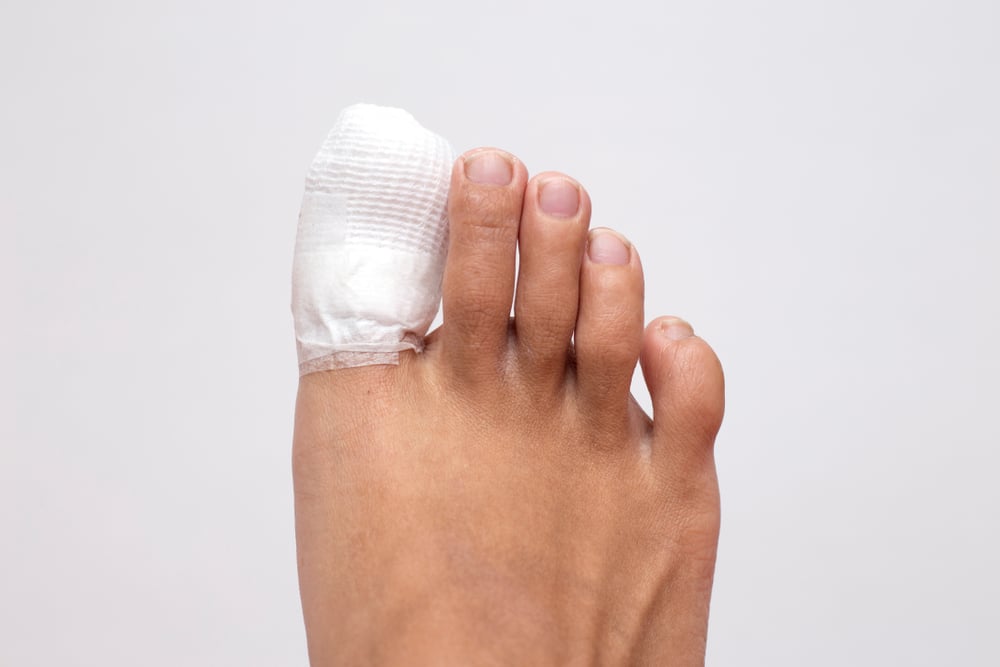
This surgery is a standard procedure that addresses the root cause of the issue and eliminates the discomfort and possible complications of ingrown toenails. It’s a very simple process—the Podiatrist will clean the area, numb it, and meticulously remove the portion of the toenail causing the problem. It is a walk-in, walk-out procedure (albeit with a new bandage on your toe on the way out).

It’s worth noting that ingrown toe nail surgery cost can vary depending on factors like the severity of the issue, your insurance coverage and the experience of the Podiatrist. It’s always wise to discuss costs with your Podiatrist before the surgery. However, you can typically expect to spend between $250 – $500 depending on the surgery required.

The Ingrown Toe Nail Surgical Procedure

When you undergo an ingrown toe nail surgery, your Podiatrist will remove the ingrown edge of your nail and, in some cases, apply phenol to prevent its regrowth. This is done under local anaesthetic, making the procedure comfortable and painless.

For any readers that hate needles, an experienced Podiatrist can gradually numb your toe in increments, so you barely feel a thing – a tiny surface-level prick, wait for the aesthesia to work, then a little deeper for the next deposit of aesthesia, and so on until the toe is completely numb and you won’t feel a thing.

Your Podiatrist will use specialised tools like clippers and forceps to remove the offending nail portion gently and precisely. In more severe cases, they might perform a total nail avulsion or chemical mastoidectomy. These techniques aim to prevent the ingrown toenail’s recurrence and promote proper nail growth.

Here are key points to remember about the surgical procedure:

Post-Surgery Nail Care and Ingrown Toe Nail Surgery Recovery

After your ingrown toe nail surgery, it’s vital to prioritise post-surgery care and recovery to guarantee proper healing and minimise the chances of complications. 

Your care regimen typically includes soaking your foot in warm water with Epsom salts. This practice not only reduces swelling but also promotes healing.

Maintaining the cleanliness and dryness of your wound is essential. Applying a topical antibiotic ointment daily can ward off infections while changing dressings as directed by your podiatrist, which ensures the best healing conditions. It’s also advisable to elevate your foot to reduce swelling, and remember, no picking at the surgical site!

Resuming normal bathing is usually fine, but strenuous activities should be avoided. Wearing properly fitted shoes will support the healing process and prevent the recurrence of ingrown toenails.

Your post-surgery recovery also involves a careful balance between rest and activity. Avoid weight-bearing activities for a period specified by your Podiatrist. This rest period and swelling management practices like warm Epsom salt soaks will help alleviate any post-surgery discomfort and aid in overall toe recovery. 

Potential Risks and Complications from Ingrown Toe Nail Surgery Recovery

While ingrown toe nail surgery has a safe prognosis, you should be aware there are some low-probability risks, such as recurrence, nail narrowing, thickening, or infection, that we should cover. 

The chance of your toenail growing back ingrown is very low, but it can happen in rare instances. 

Additionally, if you are one of the rare instances requiring multiple surgeries, this can lead to a noticeable narrowing of your nail, which may impact its appearance. If that’s a concern, discuss it with your Podiatrist beforehand.

Infections, while typically manageable with oral antibiotics, are another possible complication. You’ll need to keep a keen eye for signs of infection, such as:

Preventing Ingrown Toenail Recurrence

To prevent the recurrence of ingrown toenails, it’s important to adopt several preventative measures, such as regularly trimming your toenails straight across. This simple act helps to maintain a uniform nail edge, reducing the chances of the nail curving and digging into your skin. Avoid cutting your nails too short, as it can lead to the same problem.

Keeping your feet clean and dry is also essential. Maintaining good foot hygiene minimises the risk of infection, a common complication that can lead to ingrown toenails. When bathing, clean your feet thoroughly and dry them well, paying extra attention to the spaces between your toes.

treat treatments ingrown nail nail ingrown toenail

Equally important is your choice of footwear. Avoid shoes that are too tight or narrow, which can pressure your toes and cause the nails to grow into the surrounding skin. Opt for comfortable, well-fitting shoes that give your toes enough room to move.

If you notice any signs of nail abnormalities or feel any discomfort, seek prompt medical attention. Early treatment can prevent an ingrown toenail from progressing. Most importantly, follow any post-surgery care instructions your healthcare professional provides to ensure proper healing and minimise the chances of recurrence.

Summing It Up - Ingrown Toe Nail Surgery An (almost) Painless Treatment & Procedure

In summary, while ingrown toe nail surgery may seem intimidating, it’s a straightforward procedure that is safe and (almost) painless, that offers a much-needed and lasting remedy for an issue significantly impacting your quality of life.

Post-surgery, it’s important to rest and properly care for your wound to guarantee healthy recovery.

Understanding these aspects can help you make an informed decision about whether this surgery is the right step for you. We always recommend you speak to an experienced ingrown toenail Podiatrist about your options.  

Some ingrown toenails require surgery, and some don’t—taking the time for a professional assessment is always a good move so you have peace of mind that you’re making the best decision to get rid of your ingrown toenail once and for all.

There are a number of potential remedies for ingrown toenails, so it is important that you speak to an experienced Podiatrist about which treatment will work best for your situation – and the sooner the better. The longer you leave an ingrown toenail, the more difficult it will be to resolve.

If you think you may have an ingrown toenail and want the right professional advice on how to treat it, we currently have a limited offer running to help you out. A GAP FREE ingrown toenail assessment consult (only $69 for those without extras private insurance).

Please feel free to book yourself in online or call our friendly Reception on (03) 9457 2336 today.

Ingrown Toenails

Understand how you get ingrown toenails and what you can do to get rid of them once and for all. You don't need to put up with the pain of an ingrown toenail any longer.

podiatry care
Picture of Bellevue Podiatry Toenail Surgery Clinic

Bellevue Podiatry Toenail Surgery Clinic

Bellevue Podiatry has been serving the people of Rosanna and its surrounding suburbs for over 10 years. We have the qualifications, experience and education to effectively treat any lower limb condition or injury that requires expert podiatry care.

Picture of Nicole Hardidge - Ingrown Toenail Principal Podiatrist

Nicole Hardidge - Ingrown Toenail Principal Podiatrist

Nicole graduated with a Bachelor of Podiatry from Latrobe University in 2009 with a certificate in Advanced Clinical Education. Nicole has completed her post graduate certificate in wound care through Monash University.

Understanding Pediatric Foot Development: A Guide for Parents

Welcome parents, to an educational journey into the interesting world of pediatric foot developmentAs your little adventurers embark on the thrilling path of growth it is crucial to give attention to every aspect of their well being, their tiny feet.

In this blog we will not discuss common concerns related to foot health in children but also provide a wealth of practical advice on promoting holistic and optimal development.

Common Concerns Regarding Pediatric Foot Health

Flat feet in kids

Observing feet in your child might initially raise some concerns but rest assured that this is completely normal during infancy and early childhood.

The arches of their feet tend to develop as they grow.  While it is important to keep an eye on this development, persistent concerns should be addressed by an experienced Podiatry professional to ensure your childs foot health is progressing as expected.

Flat feet are quite common, so concerned parents should not be alarmed.  

Keep an eye on it and get it looked at if it appears to be affeting their movement.

Flat feet in toddlers is nothing to be alarmed about and can be safely assessed by an experienced childrens Podiatrist

Gait Development

The transition from those steps to confident walking is a significant milestone, in a childs life.  Every child progresses at their pace; however it is essential for parents to be mindful of any signs of toe walking or irregular walking patterns.

Early identification of these issues can have an impact, on the health of their feet making intervention even more valuable.  It is always a prudent move to book in for a check-up with an experienced Podiatrist if you notice any movement issues with your child’s developing walking and standing movements.

Choosing The Right Shoes For Kids

Selecting the pair of shoes is like laying a foundation for a building.  It truly matters.  It’s always fun to buy your kids cute footwear but it must provide adequate support.  

Ill fitting shoes can hinder the development of feet underscoring the importance of checking your childs shoe size and timely replacements as they grow.

 An experienced pediatric Podiatrist will be able to give you the right advice so you are completely confident on what shoes you should be buying for your children’s developing feet.

Our Podiatrists can give you the right advice which shoes to buy for your kids, or review shoes you have already bought to confirm thier quality and support.

back to school
Always make sure your children's shoes provide adequate support for their developing feet.

Tips for Promoting Healthy Development of Kids Feet

Encouraging Play

Children naturally gravitate towards activities that are beneficial for their foot development.  Encourage them to engage in play that involves running, jumping and climbing – activities that not bring joy but also contribute significantly to strengthening and flexing those growing feet.

Maintaining a Balanced Diet

Diet plays a role in health and has an impact on developing childrens feet.  Make sure your child enjoys a balanced diet in calcium and vitamin D to promote strong bone growth. Staying hydrated is equally important – water becomes an ally in maintaining the health of those little feet.

Regular Check Ups for Your Childrens Feet

Make foot check ups a part of your childs healthcare routine.  Take note of the condition of your childs feet during stages of development.  Be attentive, to any signs of discomfort or abnormalities. 

It is important to consult a podiatrist in a  timely manner if any concerns arise as they can provide insights and address potential issues promptly.

Addressing Specific Concerns

Ingrown Toenails

Even the tiniest feet can experience problems like ingrown toenails.

As a parent it is crucial to teach your child nail trimming techniques when they are old enough to safely do so and also stay alert for any signs of discomfort.

Make it a habit to regularly check your child’s toenails and keep an eye out for the early signs of an ingrown toenail.

If problems persist seeking help is not only wise but also essential for your childs comfort and overall well being.  Make sure you choose an experienced Podiatrist that is good withh children and makes them feel at ease.

Trim your child's nails so there is only a slight curve across the toenail to reduce likelihood of an ingrown toenail

Choosing Shoes For Developmental Stages

Recognise that infancy, toddlerhood and school age each represent unique stages of development requiring consideration when selecting footwear.  Make sure the shoes your child wears are not fashionable but also suitable for their developmental needs. 

Additionally be prepared for growth spurts that may necessitate adjustments in shoe size.

Being Proactive As A Parent About Their Foot Health

In summary, this blog provides guidance for parents to play a crucial role in promoting the safe & healthy development of their childs feet.  By understanding potential health concerns and fostering habits early on, as a parent you contribute significantly to their overall foot health.

Regular check ups for your childs feet, maintaining a diet and choosing the right shoes all play a crucial role in establishing a strong foundation for your child’s lifelong foot health.

As you begin this journey with your ones remember that their first taking steps now can pave the way for a lifetime of joyful and healthy mobility.  Encourage their playtime keep an eye on the development of their feet and don’t hesitate to seek guidance when necessary.  Here’s to the sound of those little feet resonating through the fabric of their marvelous adventures!

Give your child the right support in living an active life.  Act now and call us today on (03) 9457 2336 or book online and book in to see one of our friendly and experienced Podiatrists.

Does Medicare Cover Podiatry?

Is there a Medicare podiatry covered rebate available for podiatrists?

There are so many disorders for which podiatry is an essential therapeutic choice, including:

  • cases involving persistent pain, such as knee, hip, ankle, leg, or foot pain
  • Arthritic issues
  • chronic disorders like diabetes
  • and issues with the nails and skin

Accessing Medicare reimbursement for podiatry ought to be a straightforward process, but sadly, getting a referral for the Medicare rebate is not always simple.

Depending on the service or doctor you may have spoken to, there is frequently contradicting information about Medicare.  We’ve put up this straightforward guide to help you get through the Medicare system and understand what you might be eligible for if you have no idea where to begin or have never been through the process for podiatry before.

You can gain a better understanding of the podiatry Medicare rebate procedure by reading the following blog.  Let us assist you in understanding the Medicare rebate and how it can apply to your podiatry condition since, once you do, it can be a pretty straightforward process.

Is there a Medicare entitlement available for podiatry services?

Yes, although under some restrictions, is the slightly more complicated response.

Medicare rebates for podiatry come through the chronic disease management pathway. Since 1 July 2025 this has been called a GP Chronic Condition Management Plan, which replaced the older GP Management Plan (GPMP) and Team Care Arrangement (TCA). If a GPMP or TCA was already in place before 1 July 2025, it can still be used until 30 June 2027.

Therefore, who qualifies for a Medicare rebate from a podiatrist?

First, you must satisfy the requirements and condition, which centre on “chronic” diseases or ailments that have lasted, or are expected to last, at least six months.

Second, you must get the proper recommendation document from your doctor, who must schedule a number of appointments for you at our clinic.

ivanhoe podiatrist ivanhoe podiatrist

How many visits will be covered by the Medicare rebate for podiatrists?

Any referred allied health patient may get up to five rebated consultations per year under the chronic disease management pathway – often referred to as a care plan. That might cover speech pathology, dietetics, physiotherapy, podiatry, mental health and more.

Thus, your GP or medical practitioner might recommend that you have two podiatry clinic consultations and three physiotherapy consultations covered by Medicare.  You will require a fresh Medicare recommendation each year, even if this number is reissued annually.

Most organised podiatry patients will contact their doctor in the New Year to set up a Medicare referral, and possible Medicare rebates for the next year, and upcoming appointments after going through the system once over the course of a calendar year.  

What is covered by the Medicare refund for visits to podiatrists?

Regardless of the precise podiatry appointment type you select at the podiatry clinic for your condition, the current Medicare rebate for a consultation is $63.40 (correct at July 2026).

Therefore, the Medicare rebate is $63.40 for the initial podiatry appointment as well as any additional follow-up visits that may be suggested for you known as a care plan.  No matter why you require a podiatry appointment—for nail and skin care, foot pain, or orthotic therapy, for example—the rebate remains the same.

At Bellevue Podiatry we claim the Medicare rebate on the spot and a gap payment applies on top of it. We do not bulk bill. To check the exact out-of-pocket cost for the appointment type you need, call our Reception team on (03) 9457 2336.

What is the procedure for the Medicare refund for my visits?

The Medicare rebate procedure can occasionally be challenging, but we are aware of its challenges and want to make it as simple as possible for you.  At our clinic, you may be asked to partially cover the cost of your consultation using the Medicare refund depending on the appointment type you booked – please speak to our Reception team on (03) 9457 2336 if you would like the exact figures before you book.

Here are the stages in detail:

  1. We obtain the $63.40 Medicare rebate for you by using your Medicare card and swiping it (You avoid having to visit a Medicare office this way).
  2. You can pay the podiatry gap fee using cash, a credit card, or a debit card for your services.

What we have covered in this blog:

  • Yes, you can use the chronic disease management pathway to get a Medicare rebate for podiatry services.
  • You will need a specific GP, human services, health practitioners or health professionals referral and the eligible physical issue.
  • You’ll be eligible for a $63.40 rebate for up to five visits per year.
  • There may be a small gap payment not included in your Medicare rebate.
  • We’ll process the podiatry rebate right away to save you the trouble of visiting a Medicare office.
  • We will be pleased to answer any questions you may have about the Medicare care plan process if you give us a call or send us an email.
  • Alternately, visit your doctor as soon as possible and get a Medicare referral to a podiatrist who can assist you in being pain-free, feeling fantastic, and moving properly.

Diabetic Podiatrists Foot Care “What does a podiatrist do in diabetes?”

What does a podiatrist do with the diabetic foot? Read on for Diabetic Foot Care advice

You may find it surprising to know that nearly every five minutes, a new case of diabetes is identified in a member of the Australian population – that’s just for Australia.  

Of those people that develop diabetes, at least 15% of them, at some point in their lives, will miss the signs and develop a foot ulcer, and 6 percent of those people will end up in the hospital as a result of complications or infections related to their diabetes.  This is a very alarming trend and even more concerning is the fact these figures are growing each year.  A well-educated and trained podiatrist can help in many ways.

Unfortunately, many of individuals with diabetes who require hospital attention will have a condition that will deteriorate to the point where they will require surgical amputation of a toe, foot, or perhaps a limb.  

Hopefully you can now see why those who have diabetes are at a much greater risk of developing foot health issues; hence, it is of the utmost importance for diabetics to take care of their feet and undergo routine foot exams with a podiatrist who is well-trained and highly experienced in dealing with people with diabetes.  We also recommend they check their feet daily – just spending a minute scanning your feet every day can pay huge dividends.  Typically, a well-managed diabetes should not result in a visit to the hospital if the right care plan is in place with a podiatrist.

Diabetes assessment rosanna ivanhoe podiatry Diabetic Foot

What kinds of foot care problems are associated with people who have diabetes?

People who have diabetes are at risk for a variety of potentially very serious foot disorders if they miss the signs are are left unchecked, and podiatrists are not involved in their care:

  • Ulcers: A wound that can arise on the feet or toes, an ulcer is a type of foot injury. When this happens, the tissue that normally covers a portion of the foot or toe perishes and is unable to heal, resulting in an open wound known as ulcers.  Ulcers have the potential to worsen and are prone to serious infection.  The treatments are complex and costly, and if they are not administered correctly, the patient’s damaged limb may have to be amputated due to untreated ulcers.  Even poorly fitting shoes and bad socks can end up in resulting in an ulcer for someone with diabetes.
  • Blood flow issues: People with diabetes typically experienced a decrease in the amount of blood that flows to the feet implies that any wounds or other issues will take longer to recover from.
  • Charcot Foot: This condition occurs in people with diabetes when nerve damage in the feet leads to a weakening of the bones of the foot. When these bones become brittle, they are more likely to break, which can lead to abnormalities in the foot.
  • Nerve damage: this results in discomfort and tingling or numbness in the feet. Reduced nerve sensitivity makes it more likely that a minor injury, such as a cut or blister, may go unnoticed.  Over time, this can lead to more significant issues, including the loss of feeling in the feet and toes.

It is not difficult to comprehend the rationale behind why it is of the utmost significance for diabetics to pay close and consistent attention to the care of their feet with the assistance from a trained podiatrist.  As someone with diabetes, you may not notice if you have any cuts, sores, or other issues since your nerve sensitivity has lessened – but podiatrists will.  Also, because your blood flow has dropped as a result of your diabetes, your body’s ability to repair itself is also affected.

What kind of treatment might diabetic patients receive from podiatrists?

Podiatrists can and should be  an essential member of any health care team that treats diabetic patients.  Our team at Bellevue Podiatry has received specialised training in diabetes foot care and is able to evaluate nerve damage, identify specific diabetic foot health dangers, and assist in the development of a care and prevention strategy for diabetes-related foot issues.  

Those who have diabetes of either type 1 or type 2 should have their feet examined at least once every six months by podiatrists, as this will ensure that any possible conditions are discovered at an early stage.

What process does a Podiatrist follow when doing a diabetes foot health assessment?

The podiatrists will check the circulation to the feet of a diabetic patient by taking their pulse in two different locations: on the top of the foot and on the inside of the ankle as part of their foot assessment.

Establishing a toe pressure for someone with diabetes is another method for determining how much blood is reaching the tips of your feet.  This podiatrist method is analogous to determining the blood pressure in your arm, but instead determines how much blood is reaching your toes. This is a very essential test to determine how well the body can mend itself after it has been injured.

In addition to this, the podiatrists will examine the degree to which the nerve endings in the foot are sensitive.

In order to accomplish this, we first have the patient close their eyes, and then the podiatrist will question them about the various feelings they are experiencing.  If there is any cause for worry regarding decreased blood flow or nerve injury, a primary care physician will be alerted, and additional ultrasounds will be required for further investigation.

There are over 4000 diabetic-related amputations performed annually in Australia, with the vast majority of these being performed on the toes or feet.  The harsh reality is that early intervention has the potential to prevent 80% of these amputations from occurring.  

Throughout the northeast Melbourne metro area, the team at Bellevue Podiatry have the education and experience to assess and protect diabetic feet from unnecessary complications that could have been avoided with early intervention.  

If you have been diagnosed with diabetes, have a possible wound infection, loss of nerve sensitivity or are just interested in getting a foot health assessment please call us on (03) 9457 2336 or book online so we can get you peace of mind and start working with you to protect your feet long term.

What conditions can podiatrists treat?

What Conditions Can Podiatrist Treat? Common Podiatry Problems

The human foot is a complex, mechanical structure made up of over 100 tendons, muscles, and ligaments, 26 bones, 33 joints, and other supporting structures.  Daily pressure is constant on the feet, and with so much use and complexity, it is no surprise there is a wide range of potential health issues one can experience with their feet, ankles and lower limbs.

With so many working parts, this complex and highly developed structure requires some maintenance and health care on a regular basis. Planned and regular visits to the podiatrist are a wise investment in the strength and health of your feet in the long run. It is always better to prevent a problem before it takes hold on your health.  The longer you ignore an issue, the longer and more complex the podiatrist health treatment will likely be to resolve it.

This blog gives an overview of the ten most frequent causes of foot and ankle podiatrist conditions we see on a weekly basis at Bellevue Podiatry.  There many more conditions treated by podiatrists – this list is just a subset of the most common problems.  If you have any concerns about your foot health, please don’t hesitate to give us a call on (03) 9457 2336 to speak with one of our friendly Podiatrists.

Please click on each of the below headings to learn more about each of the foot or ankle podiatrist health conditions and disorders.

Heel pain and Plantar Fasciitis conditions can have such a negative impact on the quality of someone’s health and life – it can stop them from going to the gym, running around with the kids, and even dread taking those first few steps in the morning.  The good news is that it doesn’t have to be this way.

The Podiatrists at Bellevue Podiatry help people like you treat and eliminate heel pain and plantar fasciitis every day.  Adults, teenagers, and even children can experience acute or chronic pain in the heel and along the plantar fascia in their foot.  What usually begins as a minor pain gradually worsens over a number of years until it is unbearable.

ivanhoe podiatrist ivanhoe podiatrist

Nearly every one of us has had a wart at some time in our lives.  One of the most common podiatry conditions that we treat, many of us pick up as children at swimming pools or in communal areas.  They spread through families, particularly because many of us are barefoot around the house and use the same shower.  Many warts spontaneously disappear within two years but many also go on to be a persistent problem and can even spread to other areas of the foot and body.  This is why it’s important to see a podiatrist.

Callus and corns are usually a sign that there is too much pressure and friction going through that area of your foot.  If you have callus on the top of your toes its usually a sign that your shoes are too shallow.  Or you may have callus under the big toe joint, this usually indicates that this joint is not working effectively when you are walking and is being overloaded.  The good news is podiatrists specialise in treating corns & calluses, so don’t put them on your feet any longer.

Bunions can create a significant impact on the quality of your life – just putting on your favourite pair of shoes can be a painful task.  But it doesn’t have to be this way, bunions are one of the most common conditions podiatrists treat in the foot.  There are effective treatments available to resolve your painful bunions and get you walking pain free again.

Although not the only cause of bunions, it is a well established fact that the shoes we wear in the Western world are one of the major causes of bunions.  Did you know that bunions effect around 30% of the population in Western countries, but only effect 3% of the population in Eastern countries?  The reason for this significant difference is the shoes we wear in Western countries such as high heels or trendy loafers or boots that have a narrow toe box.

bunion forming podiatrists near

Ingrown toenails are one of the most common and annoying of the podiatry conditions we treat.  Even shoes and the weight of bed sheets can cause irritation that interferes with your day-to-day activities and quality of life.  A minor ingrown toenail in your foot can turn in to an infection that, if left untreated, could become quite serious – but the good news is ingrown nails are readily treatable, you don’t need to put with them any longer when you see a podiatrist.

Fungal toenails can and does stop someone from going to the beach or swimming pool if they feel self-conscious about showing their feet in public.  Ironically, even going to a Yoga class can be source of frustration when you have fungal toenails.

We see fungal toenails, or onychomycosis, several times a week in our clinic – it can effect one foo or spread to both feet.  An infected toenail may be thick, crumble when trimmed, and appear white, yellow, brown, or greenish.  Alternatively, some fungal infections leave a white, powdery substance on the toenail plate.  Toenail fungus infections are believed to effect up to 12% of the world’s population – it is a common problem that effects a lot of people.

ivanhoe podiatry

Do you feel pain around the back of your ankle and heel area when taking your first steps in the morning?  You may have Achilles Tendonitis, a very common but readily treatable condition.

Achilles Tendonitis can affect people from all walks of life.  People with Achilles Tendonitis usually find it only affects one leg and will usually feel a sharp pain when the Achilles Tendon is pinched by a Podiatrist testing for this condition.

Most people also find that the pain reduces once the Achilles Tendon is warmed up with increased blood flow after a period of rest (i.e. the first steps in the morning are quite painful, but dissipate somewhat after five minutes of movement).

Do you get a sharp pain just behind your toes that worsens when you stand, run or walk?  Ball of Foot pain is more common than you think and the good news is that it is readily treatable. 

There are a lot of structures (joints, muscles, bones, nerves etc) in the ball of the foot that can become painful when put under stress, so Ball of Foot pain is a common conditions that we see often in our Clinic.  Metatarsalagia is often an umbrella term used to diagnose pain on the ball of foot, but usually there is a specific part of the foot that is being stressed that needs to be addressed through a tailored treatment plan based on the needs and behaviours of each individual.

You may be wondering what that dry, itchy skin is on your foot or what the tiny little blisters are on your foot – it’s likely Tinea or as it is otherwise known, Athlete foot. 

Not all tinea appears in between the toes as cracked or wet.  Tinea is a fungal infection of the skin of the foot, usually caused by dermatophytes (fungus), that can be anywhere from mildly irritating to very painful.  It’s important to get Tinea treated before it becomes a serious problem that spreads across your foot or gets under your toenail and becomes a fungal toenail infection

Shin splints, or medial tibial stress syndrome, can be described as shinbone pain that occurs anywhere along the front of the bone.  It is commonly thought that shin splints are tiny fractures along the inside of the bone; however, this is not the case.  A sudden increase in activity causes excessive traction from muscles that attach to the lower leg, resulting in inflammation and pain.

Having shin splints can stop you from exercising and it can even hurt to walk – podiatrists can help you with these conditions and treat them effectively.  Shin splints are very frustrating and can stop you doing the things you enjoy in life, but the good news is you don’t need to put up with them any longer.

prevent blisters

Podiatrists treat many problems & conditions for feet and ankles

The above list is just a sample of the various issues that a Podiatrist has the training and experience to remedy.  At Bellevue Podiatry we know that ignoring a problem never cures it, and the longer you leave it the more likely it require a more complex treatment plan. 

If you have any foot or ankle concerns, we recommend you seek professional advice sooner rather than later.  Please call our Reception on (03)9457 2336 or book online for an appointment if you have any foot or ankle concerns.

Understanding Achilles Tendonitis and Its Treatment Options

Understanding Achilles Tendonitis and Its Treatment Options

Being physically active is crucial for maintaining good health, physical fitness, and preventing chronic diseases like diabetes and heart disease. However, both professional and amateur athletes (and weekend warriors) who have tendon injuries may experience excruciating pain that makes them less active. Achilles tendonitis is one of the more prevalent disorders affecting tendons in our society today, and the latest data shows it is becoming more common.

Acilles Tendonitis: What is it?

Tendons transfer forces from muscles to bone so that we can move. They are composed of well organised, perfectly aligned collagen fibres, which give them their extraordinary strength. In actuality, when jogging, the Achilles tendon can carry up to 12 times its own weight. The term “tendinosis” (sometimes known as “tendinopathy”) refers to deteriorating changes in the tendon structure.

Achilles tendonitis

Why Does Achilles Tendonitis Occur?

Running or other sports that require a lot of running frequently result in Achilles tendonitis because the tendon is subjected to increasing loads. This is due to the fact that the Achilles tendon joins the calf muscles to the heel bone to enable the push off necessary for running. The tendon’s midsection is where the Achilles tendonitis usually manifests, however it can also damage the area where the tendon attaches to the bone.

The majority of the time, tendons react well to consistent loading (i.e., the length and intensity of running), but they detest sudden shifts in load. As a result, the tendon structure becomes disorganised and ineffective because it is unable to support the increasing load. For instance, a person who hasn’t run in three months decides to run 30 km per week.

Age, weak calf muscles, ankle instability, and flat feet are additional risk factors for the development of Achilles tendinopathy.

Achilles Tendonitis symptoms

Achilles tendonitis is characterised by:

  • Pain when the tendon is loaded, such as during running
  • Morning stiffness in the tendon, which usually goes away as the tendon warms up;
  • Achilles tendon swelling; and
  • Reduced strength or power because of the pain.

Achilles tendonitis treatment

Tendons prefer to be consistently loaded within their limits. Therefore, appropriate loading exercises serve as the cornerstone of treatment for Achilles tendinopathy.

As overload is frequently the problem, this frequently entails initially limiting activity and gradually increasing this capacity over the ensuing weeks. Anti-inflammatory drugs and ice are other early-stage adjuncts, however they only offer temporary relief.

The Achilles tendon can then be helped by adding calf-strengthening workouts afterwards. Correction of biomechanics may also be necessary in the case of someone who has persistent ankle instability, as the right footwear can help to unload the tendon and reduce discomfort.

However, it should be remembered that even with the best treatments, this is a condition that can take months to completely treat. The safe road back to strong Acilles tendons should be a patient and planned one.

For a precise diagnosis, it’s important to contact a podiatrist because symptoms of other diseases like bursitis or nerve entrapment can resemble those of Achilles tendinopathy. Additionally, a podiatrist can offer the right exercises and tools, such orthotics, to assist manage the issue.

It’s crucial to seek professional assistance if you have Achilles tendonitis or any other foot or ankle ailment. Our team of professionals at Bellevue Podiatry is committed to you the best treatment for all of your foot and ankle health issues.

You don’t need to put up with Achilles Tendonitis any longer.  Our team of experienced Podiatrists have the education and experience to get you moving pain free again.  Take control today by booking in online or call us today on (03) 9000 0418 to get this issue sorted once and for all.