Why Your Heel Is in Pain: A Podiatrist's Guide to Causes & Treatment | Achilles Tendon Pain

Blog 144 – Why Your Heel Is in Pain: A Podiatrist’s Guide to Causes & Treatment | Heel Pain

You’re dealing with heel pain that’s disrupting your daily activities, and you need answers. Whether it’s that sharp morning stab when your feet hit the floor or the nagging ache after a long day, heel pain isn’t something you should ignore or simply endure.

Podiatrists have seen countless patients struggle with this condition, and there’s a specific approach to understanding what’s causing your discomfort and how to treat it effectively.  Let’s explore this in detail in our latest blog on dealing with heel pain.

Key Takeaways

Is Your Pain Under the Heel or at the Back? Identifying the Location

Applying ice can provide short-term pain relief for heel pain by reducing inflammation, but it may not fix the underlying problem, especially if the pain is caused by a degenerative condition like plantar fasciosis. To use ice, apply a cloth-covered ice pack or frozen bottle for 15-20 minutes, three to four times a day.

Where exactly does your heel hurt? The location of your heel pain provides essential diagnostic clues.

  • Pain Under Heel

    If you're experiencing pain under your heel (plantar heel), you're likely dealing with plantar fasciitis—especially if it's sharpest with the morning's first steps or after sitting. This pain typically localises to the inner heel bone.

  • Pain Back of Heel

    However, if your discomfort occurs at the back of your heel near the Achilles tendon, you're probably facing Achilles tendinopathy. This condition worsens during push-off activities like walking uphill or running.

Identifying whether your pain is plantar or posterior helps determine the underlying cause and appropriate treatment.

Common Causes for Pain Under the Heel

When your heel is in pain, plantar fasciitis stands as the most likely diagnosis, causing that characteristic sharp, stabbing sensation at the bottom of your foot that’s typically worst with your first morning steps.

You might assume heel spurs visible on X-rays are causing your pain, but these bony growths often exist without symptoms and aren’t always the true culprit behind your discomfort.

Alternatively, you could be dealing with a stone bruise or fat pad contusion, which creates a deep, aching pain in the centre of your heel that feels like you’re walking on a pebble.

Plantar Fasciitis: The Most Common Culprit

Most commonly, pain under your heel stems from plantar fasciitis, an inflammatory condition affecting the plantar fascia—the thick band of connective tissue that runs from your heel bone to your forefoot and supports your arch.

There are several common reasons for arch pain, with plantar fasciitis being one of the most common. The good news is there are a number of effective and lasting evidence-based podiatry treatments meaning you don't have to put up with the pain any longer.

You’ll typically experience sharp, stabbing pain at the inner heel that’s worst with your first morning steps or after periods of rest. The discomfort often improves with activity but may return after prolonged standing.

While heel spur formation can accompany this condition, it’s the plantar fascia inflammation and degeneration—not tendinopathy—that causes your pain.

You might brush off heel pain as a simple “heel spur“, but this common assumption often leads you down the wrong treatment path.

These bony calcifications develop from repetitive plantar fascia traction, yet 50% of people with heel spurs experience no symptoms. The real culprit is usually plantar fasciitis—degeneration and inflammation of the plantar fascia itself.

Aspect Heel Spur Plantar Fasciitis
Nature
Bony calcification
Soft tissue inflammation
Pain Source
Rarely the cause
Primary problem
Treatment Focus
Conservative care
Stretching, orthotics, therapy
Surgery Need
Almost never – only after failed conservative care
Also almost never

Effective treatment targets the underlying soft-tissue pathology, not the spur.

Step on a sharp rock or land hard on your heel, and you might end up with a stone bruise—a painful contusion of the calcaneal fat pad that creates deep, aching pain directly under your heel bone.

This impact injury damages the protective cushioning beneath your heel, causing localised tenderness that worsens when walking barefoot or applying direct pressure.

A fat pad contusion, or bruised heel, is an injury to the fatty tissue beneath the heel bone caused by trauma or repetitive impact, resulting in pain, tenderness, and sometimes swelling. Causes include activities like running, improper footwear, and aging.

You’ll likely notice swelling and bruising in severe cases. Treatment focuses on rest, ice, anti-inflammatory medication, and cushioned insoles or heel cups to offload pressure.

Most stone bruises heal within weeks to months with proper care and activity modification.

Common Causes for Pain at the Back of the Heel

When you experience pain in the back of your heel, you’re likely dealing with one of several distinct conditions that affect the posterior heel region.

Achilles tendinitis causes pain above the heel bone due to inflammation or degeneration of the tendon. In contrast, heel bursitis creates localised swelling and tenderness from irritation of the fluid-filled sacs between structures.

In children and adolescents, Sever’s disease represents a unique cause of posterior heel pain related to growth plate inflammation during periods of rapid development.

Achilles Tendinitis: Pain Above the Heel Bone

While plantar fasciitis affects the bottom of your heel, Achilles tendinitis targets the back portion, specifically the thick tendon that connects your calf muscles to your heel bone.

This overuse injury causes posterior heel painstiffness, and swelling 2–6 centimetres above your heel. You’ll notice symptoms worsen during push-off activities like walking or running, particularly in mornings after rest.

Insertional Achilles Tendinopathy is a chronic overuse injury at the insertion of the Achilles Tendon. People with this problem generally present with pain when first getting out of bed which reduces slightly after walking a short distance and then returns again with extended walking.

Risk factors include sudden activity increases, tight calf muscles, and inappropriate footwear.

Treatment involves relative rest, ice, anti-inflammatories, calf-strengthening exercises, and heel lifts. Most cases improve with conservative care over weeks to months.

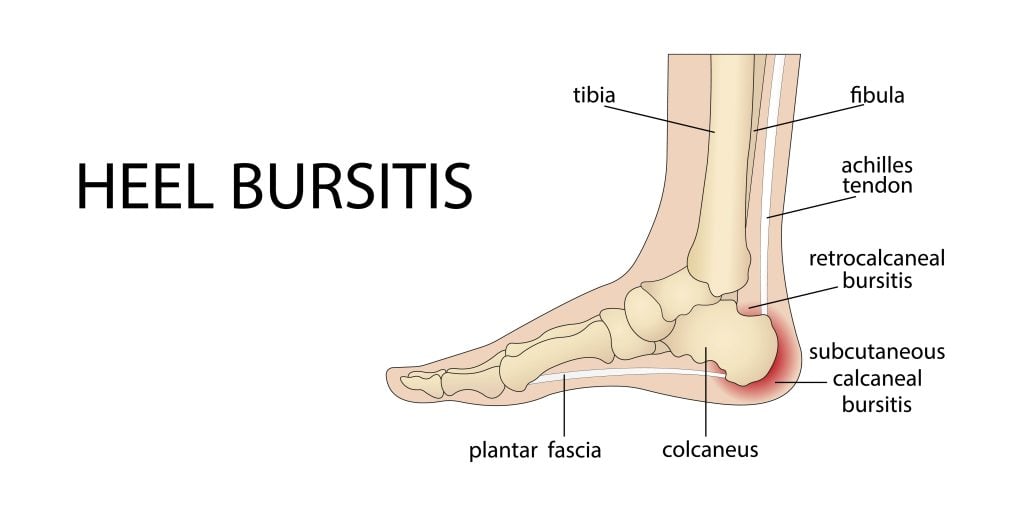
Heel bursitis acts up when the small, fluid-filled sac between your Achilles tendon and heel bone becomes inflamed, creating a painful condition that’s distinct from but often confused with Achilles tendinitis.

This overuse injury typically develops from repetitive friction caused by tight shoes, excessive running, or sudden training increases.

Heel bursitis is an inflammation of a fluid-filled sac (bursa) that cushions the heel, causing pain, swelling, and tenderness. It's often due to repetitive stress from activities like running, wearing ill-fitting footwear, or prolonged standing.

You’ll experience retrocalcaneal pain with direct pressure and push-off movements, often accompanied by heel swelling, warmth, and visible bumping. Treatment starts conservatively with rest, ice, heel lifts, proper footwear, and calf stretching.

Persistent cases may require steroid injections, shockwave therapy, or surgical removal of the inflamed bursa.

Although Sever’s disease sounds alarming, it’s actually a common and treatable overuse injury that affects the growth plate at the back of your child’s heel bone. Also called calcaneal apophysitis, this condition typically strikes physically active children aged 8-15 during growth spurts.

Sever's disease (calcaneal apophysitis) is a common cause of heel pain in growing children and adolescents, typically aged 8-15, resulting from repetitive stress on the growth plate at the back of the heel.

Your child will likely experience heel pain that worsens with running or jumping activities. The diagnosis is straightforward—based on symptoms and a positive squeeze test where pressing the heel causes tenderness.

Treatment focuses on rest from aggravating sports, stretching tight calf muscles, supportive footwear, and a gradual return to activities as symptoms improve.

When Should I See a Podiatrist If My Heel Is in Pain?

If your heel pain persists beyond two to four weeks despite basic self-care measures like rest, ice, stretching, and wearing supportive shoes, you should schedule an appointment with a podiatrist.

Professional assessment becomes essential for accurate diagnosis and treatment of conditions like plantar fasciitis or Achilles tendinopathy.

Seek Immediate Care Schedule Soon
Injury with swelling / deformity
Numbness or tingling
Severe walking limitation
Pain disrupting sleep
Diabetes with complications
Recurring heel pain

Don’t delay if you have risk factors like diabetes, arthritis, or obesity, as these require specialised intervention.

Custom Orthotics are an effective way to resolve a number of biomechnical issues that can lead to outside of foot pain. It is crucial to ensure an accurate diagnosis and biomechanical assessment for an effective prescription of custom orthotics.

How a Podiatrist Diagnoses Your Heel Pain

When you visit a podiatrist for heel pain, they’ll begin with a thorough history that pinpoints your pain’s exact location, onset, and triggers. They’ll ask about morning stiffness and activity patterns to differentiate plantar fasciitis from Achilles tendinopathy.

The physical exam follows, checking for point tenderness at specific locations—the medial calcaneal tubercle suggests plantar fasciitis, while posterior heel pain indicates Achilles issues. Your podiatrist may perform specialised tests like the windlass test and assess your gait.

A treadmill gait assessment is a valuable technique to quickly identify issues with your walking style that could be causing your foot pain so a targeted & effective treatment plan can be implemented.

Imaging starts with X-rays to rule out fractures, followed by ultrasound for soft-tissue evaluation or MRI for complex cases.

Professional Heel Pain Treatments That Get Results

Once your podiatrist has identified the specific cause of your heel pain, they’ll implement targeted professional treatments designed to address both your symptoms and underlying biomechanical issues.

This evidence-based intervention includes custom orthotics to correct faulty foot mechanics, advanced therapies like shockwave treatment for persistent pain, and specialised mobilisation programmes to restore proper function.

You’ll also benefit from professional taping techniques that provide immediate structural support while your healing progresses.

Custom Foot Orthotics to Correct Biomechanics

Custom foot orthotics step up as a precision treatment when standard shoe inserts can’t address the underlying biomechanical issues driving your heel pain.

These prescription-made devices correct abnormal foot mechanics like overpronation that contribute to plantar fasciitis and Achilles tendinopathy. Podiatrists create them from 3D scans, tailoring arch height and heel lifts to your specific gait patterns.

For cases where custom orthotics and conservative measures haven’t provided adequate relief after several months, Extracorporeal Shockwave Therapy (ESWT) emerges as a clinically proven option for chronic heel pain. This noninvasive treatment delivers focused acoustic pulses to the plantar fascia or tendon enthesis, stimulating healing in damaged tissue.

Shockwave therapy, or extracorporeal shockwave therapy (ESWT), is a non-invasive treatment for plantar fasciitis that uses high-energy sound waves to stimulate healing, improve blood flow, and regenerate tissues in the heel and arch. It is a conservative option for chronic cases that haven't responded to other treatments and works by over-stimulating nerves to reduce pain and triggering repair mechanisms.

Clinical trials demonstrate that 60-80% of patients with chronic plantar fasciitis experience meaningful pain reduction following ESWT protocols. Treatment typically involves 1-5 sessions spaced weekly, delivering 1,500-3,000 targeted shocks.

You’ll likely experience gradual improvement over 3-12 months, with minimal complications beyond temporary soreness.

Beyond passive treatments, targeted foot mobilisation and strengthening programmes address the underlying biomechanical dysfunction that perpetuates heel pain.

Foot mobilisation techniques restore normal joint function in restricted areas like the subtalar and talonavicular joints, reducing plantar fascia tension.

Progressive strengthening targets both intrinsic foot muscles and the posterior tibialis to improve biomechanics.

You’ll typically need 6–12 supervised sessions with individualised progression for optimal outcomes.

When conservative treatments need time to work, taping and strapping techniques step in to provide immediate mechanical support and pain relief for heel conditions:

These low-cost, low-risk techniques complement stretching and orthotics while longer-term treatments take effect.

An experienced Podiatrist can work closely with you to understand your health needs and implement an effective heel pain rehabilitation program. Professional taping of your foot can help relieve pressure off the plantar fascia and bring immediate pain relief.

Summing It All Up...

Heel pain can stem from various causes, such as plantar fasciitisAchilles tendinitisheel spurs, or stress fractures, but understanding the underlying issues through a podiatrist’s expertise is key to effective treatment.

We have explored common triggers, diagnostic approaches, and conservative options like stretching, orthotics, physical therapy, and lifestyle modifications that often resolve discomfort without invasive measures.

By addressing symptoms early, you can prevent chronic problems and regain your mobility. If you’re experiencing persistent heel pain, don’t wait—contact Bellevue Podiatry today to schedule a consultation and take the first step towards pain-free steps.

If you want the right professional advice on how to treat your foot pain, we currently have a limited offer running to help you out. For just $79 (usually valued at $189), book in online for our Complete Foot Pain Assessment & Treatment Consultation will get:

Check out our heel pain eBook below for further details on this special offer as well as other tips and techniques you can try at home to manage your plantar fasciitis and foot pain.

You don’t need to put up with sore feet any longer.  Our team of Podiatrists have the education and experience to get you moving pain free again.  Take control today by booking in online or call us today on (03) 8104 9270 to get this issue sorted once and for all.

Heel Pain

Understand what causes your foot pain and what you can do to get rid of it once and for all. Find out what treatments can get you back to walking pain free so you can enjoy living an active life again!

plantar fasciitis treatments best arch support insoles for plantar fasciitis
Picture of Bellevue Podiatry

Bellevue Podiatry

Bellevue Podiatry has been serving the people of Rosanna and its surrounding suburbs for over 10 years. We have the qualifications, experience and education to effectively treat any lower limb condition or injury that requires expert podiatry care.

Picture of Nicole Hardidge - Principal Podiatrist

Nicole Hardidge - Principal Podiatrist

Nicole graduated with a Bachelor of Podiatry from Latrobe University in 2009 with a certificate in Advanced Clinical Education. Nicole has completed her post graduate certificate in wound care through Monash University.

If you would like a deeper understanding of the content discussed in this article, please click on the links below:

  1. https://www.mayoclinic.org/diseases-conditions/plantar-fasciitis/symptoms-causes/syc-20354846 (Mayo Clinic)
  2. https://www.health.harvard.edu/a_to_z/heel-pain-a-to-z (Harvard Health Publishing)
  3. https://my.clevelandclinic.org/health/symptoms/heel-pain (Cleveland Clinic)
  4. https://www.apma.org/heelpain (American Podiatric Medical Association)
  5. https://orthoinfo.aaos.org/en/diseases–conditions/heel-pain/ (American Academy of Orthopaedic Surgeons)