September 2025

Blog 144 – Why Your Heel Is in Pain: A Podiatrist’s Guide to Causes & Treatment | Heel Pain

You’re dealing with heel pain that’s disrupting your daily activities, and you need answers. Whether it’s that sharp morning stab when your feet hit the floor or the nagging ache after a long day, heel pain isn’t something you should ignore or simply endure.

Podiatrists have seen countless patients struggle with this condition, and there’s a specific approach to understanding what’s causing your discomfort and how to treat it effectively.  Let’s explore this in detail in our latest blog on dealing with heel pain.

Key Takeaways

Is Your Pain Under the Heel or at the Back? Identifying the Location

Applying ice can provide short-term pain relief for heel pain by reducing inflammation, but it may not fix the underlying problem, especially if the pain is caused by a degenerative condition like plantar fasciosis. To use ice, apply a cloth-covered ice pack or frozen bottle for 15-20 minutes, three to four times a day.

Where exactly does your heel hurt? The location of your heel pain provides essential diagnostic clues.

  • Pain Under Heel

    If you're experiencing pain under your heel (plantar heel), you're likely dealing with plantar fasciitis—especially if it's sharpest with the morning's first steps or after sitting. This pain typically localises to the inner heel bone.

  • Pain Back of Heel

    However, if your discomfort occurs at the back of your heel near the Achilles tendon, you're probably facing Achilles tendinopathy. This condition worsens during push-off activities like walking uphill or running.

Identifying whether your pain is plantar or posterior helps determine the underlying cause and appropriate treatment.

Common Causes for Pain Under the Heel

When your heel is in pain, plantar fasciitis stands as the most likely diagnosis, causing that characteristic sharp, stabbing sensation at the bottom of your foot that’s typically worst with your first morning steps.

You might assume heel spurs visible on X-rays are causing your pain, but these bony growths often exist without symptoms and aren’t always the true culprit behind your discomfort.

Alternatively, you could be dealing with a stone bruise or fat pad contusion, which creates a deep, aching pain in the centre of your heel that feels like you’re walking on a pebble.

Plantar Fasciitis: The Most Common Culprit

Most commonly, pain under your heel stems from plantar fasciitis, an inflammatory condition affecting the plantar fascia—the thick band of connective tissue that runs from your heel bone to your forefoot and supports your arch.

There are several common reasons for arch pain, with plantar fasciitis being one of the most common. The good news is there are a number of effective and lasting evidence-based podiatry treatments meaning you don't have to put up with the pain any longer.

You’ll typically experience sharp, stabbing pain at the inner heel that’s worst with your first morning steps or after periods of rest. The discomfort often improves with activity but may return after prolonged standing.

While heel spur formation can accompany this condition, it’s the plantar fascia inflammation and degeneration—not tendinopathy—that causes your pain.

You might brush off heel pain as a simple “heel spur“, but this common assumption often leads you down the wrong treatment path.

These bony calcifications develop from repetitive plantar fascia traction, yet 50% of people with heel spurs experience no symptoms. The real culprit is usually plantar fasciitis—degeneration and inflammation of the plantar fascia itself.

Aspect Heel Spur Plantar Fasciitis
Nature
Bony calcification
Soft tissue inflammation
Pain Source
Rarely the cause
Primary problem
Treatment Focus
Conservative care
Stretching, orthotics, therapy
Surgery Need
Almost never – only after failed conservative care
Also almost never

Effective treatment targets the underlying soft-tissue pathology, not the spur.

Step on a sharp rock or land hard on your heel, and you might end up with a stone bruise—a painful contusion of the calcaneal fat pad that creates deep, aching pain directly under your heel bone.

This impact injury damages the protective cushioning beneath your heel, causing localised tenderness that worsens when walking barefoot or applying direct pressure.

A fat pad contusion, or bruised heel, is an injury to the fatty tissue beneath the heel bone caused by trauma or repetitive impact, resulting in pain, tenderness, and sometimes swelling. Causes include activities like running, improper footwear, and aging.

You’ll likely notice swelling and bruising in severe cases. Treatment focuses on rest, ice, anti-inflammatory medication, and cushioned insoles or heel cups to offload pressure.

Most stone bruises heal within weeks to months with proper care and activity modification.

Common Causes for Pain at the Back of the Heel

When you experience pain in the back of your heel, you’re likely dealing with one of several distinct conditions that affect the posterior heel region.

Achilles tendinitis causes pain above the heel bone due to inflammation or degeneration of the tendon. In contrast, heel bursitis creates localised swelling and tenderness from irritation of the fluid-filled sacs between structures.

In children and adolescents, Sever’s disease represents a unique cause of posterior heel pain related to growth plate inflammation during periods of rapid development.

Achilles Tendinitis: Pain Above the Heel Bone

While plantar fasciitis affects the bottom of your heel, Achilles tendinitis targets the back portion, specifically the thick tendon that connects your calf muscles to your heel bone.

This overuse injury causes posterior heel painstiffness, and swelling 2–6 centimetres above your heel. You’ll notice symptoms worsen during push-off activities like walking or running, particularly in mornings after rest.

Insertional Achilles Tendinopathy is a chronic overuse injury at the insertion of the Achilles Tendon. People with this problem generally present with pain when first getting out of bed which reduces slightly after walking a short distance and then returns again with extended walking.

Risk factors include sudden activity increases, tight calf muscles, and inappropriate footwear.

Treatment involves relative rest, ice, anti-inflammatories, calf-strengthening exercises, and heel lifts. Most cases improve with conservative care over weeks to months.

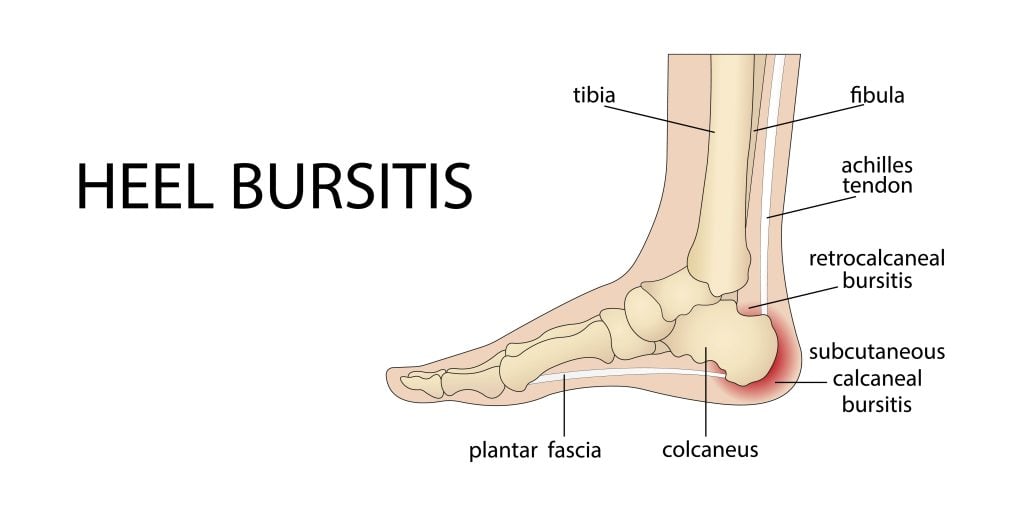
Heel bursitis acts up when the small, fluid-filled sac between your Achilles tendon and heel bone becomes inflamed, creating a painful condition that’s distinct from but often confused with Achilles tendinitis.

This overuse injury typically develops from repetitive friction caused by tight shoes, excessive running, or sudden training increases.

Heel bursitis is an inflammation of a fluid-filled sac (bursa) that cushions the heel, causing pain, swelling, and tenderness. It's often due to repetitive stress from activities like running, wearing ill-fitting footwear, or prolonged standing.

You’ll experience retrocalcaneal pain with direct pressure and push-off movements, often accompanied by heel swelling, warmth, and visible bumping. Treatment starts conservatively with rest, ice, heel lifts, proper footwear, and calf stretching.

Persistent cases may require steroid injections, shockwave therapy, or surgical removal of the inflamed bursa.

Although Sever’s disease sounds alarming, it’s actually a common and treatable overuse injury that affects the growth plate at the back of your child’s heel bone. Also called calcaneal apophysitis, this condition typically strikes physically active children aged 8-15 during growth spurts.

Sever's disease (calcaneal apophysitis) is a common cause of heel pain in growing children and adolescents, typically aged 8-15, resulting from repetitive stress on the growth plate at the back of the heel.

Your child will likely experience heel pain that worsens with running or jumping activities. The diagnosis is straightforward—based on symptoms and a positive squeeze test where pressing the heel causes tenderness.

Treatment focuses on rest from aggravating sports, stretching tight calf muscles, supportive footwear, and a gradual return to activities as symptoms improve.

When Should I See a Podiatrist If My Heel Is in Pain?

If your heel pain persists beyond two to four weeks despite basic self-care measures like rest, ice, stretching, and wearing supportive shoes, you should schedule an appointment with a podiatrist.

Professional assessment becomes essential for accurate diagnosis and treatment of conditions like plantar fasciitis or Achilles tendinopathy.

Seek Immediate Care Schedule Soon
Injury with swelling / deformity
Numbness or tingling
Severe walking limitation
Pain disrupting sleep
Diabetes with complications
Recurring heel pain

Don’t delay if you have risk factors like diabetes, arthritis, or obesity, as these require specialised intervention.

Custom Orthotics are an effective way to resolve a number of biomechnical issues that can lead to outside of foot pain. It is crucial to ensure an accurate diagnosis and biomechanical assessment for an effective prescription of custom orthotics.

How a Podiatrist Diagnoses Your Heel Pain

When you visit a podiatrist for heel pain, they’ll begin with a thorough history that pinpoints your pain’s exact location, onset, and triggers. They’ll ask about morning stiffness and activity patterns to differentiate plantar fasciitis from Achilles tendinopathy.

The physical exam follows, checking for point tenderness at specific locations—the medial calcaneal tubercle suggests plantar fasciitis, while posterior heel pain indicates Achilles issues. Your podiatrist may perform specialised tests like the windlass test and assess your gait.

A treadmill gait assessment is a valuable technique to quickly identify issues with your walking style that could be causing your foot pain so a targeted & effective treatment plan can be implemented.

Imaging starts with X-rays to rule out fractures, followed by ultrasound for soft-tissue evaluation or MRI for complex cases.

Professional Heel Pain Treatments That Get Results

Once your podiatrist has identified the specific cause of your heel pain, they’ll implement targeted professional treatments designed to address both your symptoms and underlying biomechanical issues.

This evidence-based intervention includes custom orthotics to correct faulty foot mechanics, advanced therapies like shockwave treatment for persistent pain, and specialised mobilisation programmes to restore proper function.

You’ll also benefit from professional taping techniques that provide immediate structural support while your healing progresses.

Custom Foot Orthotics to Correct Biomechanics

Custom foot orthotics step up as a precision treatment when standard shoe inserts can’t address the underlying biomechanical issues driving your heel pain.

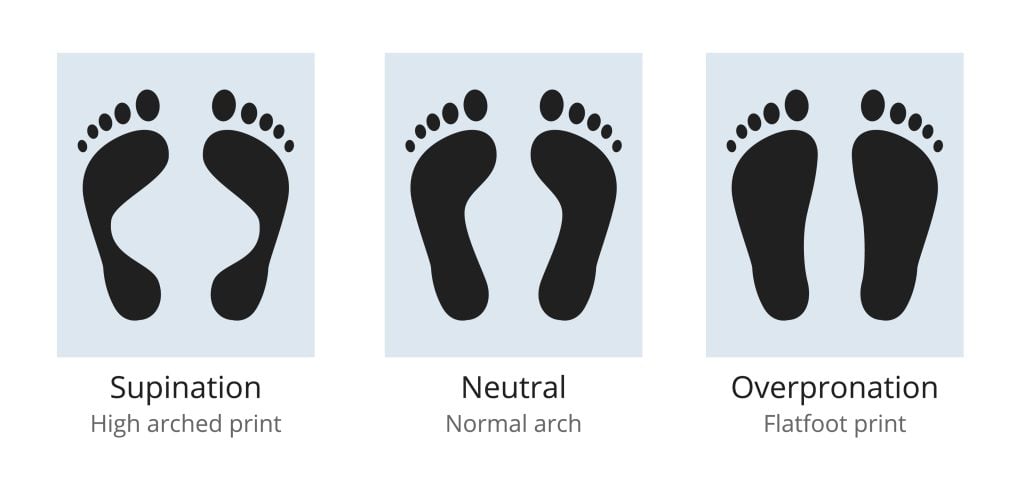
These prescription-made devices correct abnormal foot mechanics like overpronation that contribute to plantar fasciitis and Achilles tendinopathy. Podiatrists create them from 3D scans, tailoring arch height and heel lifts to your specific gait patterns.

For cases where custom orthotics and conservative measures haven’t provided adequate relief after several months, Extracorporeal Shockwave Therapy (ESWT) emerges as a clinically proven option for chronic heel pain. This noninvasive treatment delivers focused acoustic pulses to the plantar fascia or tendon enthesis, stimulating healing in damaged tissue.

Shockwave therapy, or extracorporeal shockwave therapy (ESWT), is a non-invasive treatment for plantar fasciitis that uses high-energy sound waves to stimulate healing, improve blood flow, and regenerate tissues in the heel and arch. It is a conservative option for chronic cases that haven't responded to other treatments and works by over-stimulating nerves to reduce pain and triggering repair mechanisms.

Clinical trials demonstrate that 60-80% of patients with chronic plantar fasciitis experience meaningful pain reduction following ESWT protocols. Treatment typically involves 1-5 sessions spaced weekly, delivering 1,500-3,000 targeted shocks.

You’ll likely experience gradual improvement over 3-12 months, with minimal complications beyond temporary soreness.

Beyond passive treatments, targeted foot mobilisation and strengthening programmes address the underlying biomechanical dysfunction that perpetuates heel pain.

Foot mobilisation techniques restore normal joint function in restricted areas like the subtalar and talonavicular joints, reducing plantar fascia tension.

Progressive strengthening targets both intrinsic foot muscles and the posterior tibialis to improve biomechanics.

You’ll typically need 6–12 supervised sessions with individualised progression for optimal outcomes.

When conservative treatments need time to work, taping and strapping techniques step in to provide immediate mechanical support and pain relief for heel conditions:

These low-cost, low-risk techniques complement stretching and orthotics while longer-term treatments take effect.

An experienced Podiatrist can work closely with you to understand your health needs and implement an effective heel pain rehabilitation program. Professional taping of your foot can help relieve pressure off the plantar fascia and bring immediate pain relief.

Summing It All Up...

Heel pain can stem from various causes, such as plantar fasciitisAchilles tendinitisheel spurs, or stress fractures, but understanding the underlying issues through a podiatrist’s expertise is key to effective treatment.

We have explored common triggers, diagnostic approaches, and conservative options like stretching, orthotics, physical therapy, and lifestyle modifications that often resolve discomfort without invasive measures.

By addressing symptoms early, you can prevent chronic problems and regain your mobility. If you’re experiencing persistent heel pain, don’t wait—contact Bellevue Podiatry today to schedule a consultation and take the first step towards pain-free steps.

If you want the right professional advice on how to treat your foot pain, we currently have a limited offer running to help you out. For just $79 (usually valued at $189), book in online for our Complete Foot Pain Assessment & Treatment Consultation will get:

Check out our heel pain eBook below for further details on this special offer as well as other tips and techniques you can try at home to manage your plantar fasciitis and foot pain.

You don’t need to put up with sore feet any longer.  Our team of Podiatrists have the education and experience to get you moving pain free again.  Take control today by booking in online or call us today on (03) 8104 9270 to get this issue sorted once and for all.

Heel Pain

Understand what causes your foot pain and what you can do to get rid of it once and for all. Find out what treatments can get you back to walking pain free so you can enjoy living an active life again!

plantar fasciitis treatments best arch support insoles for plantar fasciitis
Picture of Bellevue Podiatry

Bellevue Podiatry

Bellevue Podiatry has been serving the people of Rosanna and its surrounding suburbs for over 10 years. We have the qualifications, experience and education to effectively treat any lower limb condition or injury that requires expert podiatry care.

Picture of Nicole Hardidge - Principal Podiatrist

Nicole Hardidge - Principal Podiatrist

Nicole graduated with a Bachelor of Podiatry from Latrobe University in 2009 with a certificate in Advanced Clinical Education. Nicole has completed her post graduate certificate in wound care through Monash University.

If you would like a deeper understanding of the content discussed in this article, please click on the links below:

  1. https://www.mayoclinic.org/diseases-conditions/plantar-fasciitis/symptoms-causes/syc-20354846 (Mayo Clinic)
  2. https://www.health.harvard.edu/a_to_z/heel-pain-a-to-z (Harvard Health Publishing)
  3. https://my.clevelandclinic.org/health/symptoms/heel-pain (Cleveland Clinic)
  4. https://www.apma.org/heelpain (American Podiatric Medical Association)
  5. https://orthoinfo.aaos.org/en/diseases–conditions/heel-pain/ (American Academy of Orthopaedic Surgeons)

Blog 143 – Custom Orthotics: The Ultimate Guide to Foot Pain Relief

If you’ve ever struggled with persistent foot pain, you might be considering custom orthotics as a solution. These prescription-made insoles offer a tailored approach to address specific foot mechanics and alleviate discomfort.

Unlike off-the-shelf products, custom orthotics are designed based on your unique needs. Understanding their benefits and the right time to seek a custom assessment can be vital for effective relief. Let’s explore what you need to know about these specialised devices.

Key Takeaways

What Is A Custom Orthotic?

Custom Orthotics are an effective way to resolve a number of biomechnical issues that can lead to outside of foot pain. It is crucial to ensure an accurate diagnosis and biomechanical assessment for an effective prescription of custom orthotics.

While over-the-counter insoles provide generic support, custom orthotics are prescription medical devices individually designed from an in-office cast or 3D scan to correct your specific foot biomechanics. Unlike one-size-fits-all solutions, these custom-made orthotics target your unique structural and functional abnormalities.

Your foot orthotics are fabricated from precise materials like polypropylene or EVA, engineered to deliver targeted arch support, motion control, or pressure redistribution. The orthotic prescription stems from an all-encompassing biomechanical assessment, including gait analysis and physical examination.

Custom-made orthotics address the root cause of conditions like plantar fasciitis, tendonitis, and structural deformities rather than masking symptoms. They’re matched to your specific footwear and activity requirements, providing superior therapeutic outcomes when persistent mechanical dysfunction exists.

The Critical Difference: Custom Orthotics vs. Off-the-Shelf Inserts

Custom orthotics offer tailored support, improved comfort, and long-term benefits for specific foot conditions by using 3D foot impressions and high-quality materials, while over-the-counter (OTC) orthotics are mass-produced, less expensive, and suitable for mild, temporary relief rather than addressing the underlying cause of chronic issues.

Custom orthotics offer a level of support and correction that off-the-shelf inserts can’t match. 

While generic insoles provide temporary cushioning, they lack the personalised biomechanical modifications of custom-made orthotics.

Your podiatrist will create foot orthoses explicitly tailored to your feet, considering factors like your footwear and activity level, which enhances their effectiveness, especially for chronic conditions like plantar fasciitis

Custom orthotics require a thorough biomechanical assessment and casting process, resulting in devices that precisely control abnormal foot mechanics.

In contrast, off-the-shelf inserts are mass-produced, one-size-fits-most solutions that may fail to address persistent biomechanical issues. 

Investing in custom orthotics can markedly improve your comfort and overall foot health.

What Conditions Can Custom Orthotics Treat?

Custom orthotics can effectively address various foot conditions, such as plantar fasciitis, flat feet, and bunions.

By providing targeted support and improving alignment, these devices help alleviate pain while correcting abnormal foot mechanics.

Whether you’re dealing with heel pain or discomfort in the ball of your foot, custom orthotics offer a tailored solution to enhance your overall foot health.

Plantar Fasciitis (Heel Pain)

Plantar fasciitis, a common culprit behind heel pain, stems from inflammation and micro-tearing of the plantar fascia, the thick band of tissue that runs along the bottom of your foot.

Custom orthotics can significantly alleviate this pain by providing targeted arch support and improving foot alignment. Here’s how they help:

For lasting relief, consult a foot clinic to explore how custom orthotics can be tailored to your specific needs associated with plantar fasciitis.

Foot pain can stem from various conditions, and flat feet—often referred to as fallen arches—are a common source of discomfort. If you have pes planus, you might experience overpronation, which can strain the plantar fascia and lead to further issues such as knee pain.

Have you had an experienced podiatrist conduct a biomechanical assessment of your foot? It's possible your foot may have a structural issue that can be effectively resolved by a number of evidence-based podiatry treatments so you can walk pain free again.

Custom orthotics are a practical solution, offering personalised arch support to counteract the mechanics of flat feet and redistribute pressure. Whether you have flexible or rigid flat feet, orthotics can provide relief by improving your gait and absorbing shock.

A thorough clinical assessment, including gait analysis and casting, ensures that your custom orthotics are explicitly tailored to your foot posture and activity demands, enhancing comfort and function in your daily life.

When you’re dealing with Achilles tendinopathy, finding effective relief can be challenging, especially if your foot mechanics are contributing to the problem. Custom orthotics can be a game-changer by addressing issues like excessive rearfoot pronation or forefoot varus alignment, which often exacerbate tendon strain.

Achilles Tendon issues are just one of several reasons you may be experiencing heel pain. This is why it is so important you work with an experienced heel pain Podiatrist that can accurately diagnose the root cause of your heel pain so an effective treatment plan can be put in place.

By redistributing load and improving foot and ankle alignment, these orthotics help reduce peak tendon forces during walking. They’re typically designed with a rigid to semi-rigid structure, incorporating heel raises and cushioning to offload the Achilles tendon.

If conservative treatments haven’t worked, a thorough biomechanical assessment can reveal the need for these tailored devices, ultimately enhancing your recovery when paired with eccentric loading exercises.

Bunions, or hallux valgus, can develop gradually, causing discomfort and affecting your overall foot function. Custom orthotics can’t reverse the bony deformity of bunions, but they can markedly alleviate pain and slow progression. Here’s how:

If you experience persistent pain or are unsure of your foot mechanics, consider consulting a specialist for custom orthotics tailored to your needs and comfort.

Metatarsalgia, a condition marked by pain under the ball of your foot, can markedly impact daily activities and quality of life. If you’re struggling with this discomfort, custom orthotics could be your solution. They effectively manage metatarsalgia by redistributing pressure across the foot.

Here are four ways orthotics can help:

Don’t let metatarsalgia keep you from enjoying life; explore your options for lasting relief.

If you’re experiencing general pain in your ankles, knees, or hips, custom orthotics might be the key to finding relief. These devices correct foot mechanics, targeting issues like excessive pronation or supination that can lead to instability and pain in your lower limbs.

Condition Benefits of Custom Orthotics
Ankle Pain
Reduces abnormal foot motion, lowers sprain risk
Knee Pain
Improves knee tracking to alleviate discomfort
Hip Pain
Realigns mechanics to ease strain on hip muscles

Using orthotics, particularly when off-the-shelf options fail, can address specific biomechanical faults, helping you regain function and comfort in your everyday activities. Always consult with a specialist to tailor your orthotics for maximum effectiveness.

Key Benefits of Choosing Custom Orthotics

Though many people experience foot pain, choosing custom orthotics can markedly improve your comfort and mobility. Here are some key benefits of these custom-made solutions:

Opting for custom orthotics not only tackles pain but also promotes better overall foot health, making a significant difference in your daily life.

Is heel pain stopping you from doing the things you enjoy? You don't need to put up with it, there are effective and lasting treatments available. Get the help you need today.

Who Can Benefit From Custom Orthotics?

Custom orthotics can markedly enhance comfort and performance for athletes and active individuals by addressing unique foot mechanics.

If you stand on your feet all day at work, these custom supports can help reduce fatigue and pain.

Additionally, children with foot development issues and individuals with arthritis may find tailored orthotics essential for improving mobility and managing discomfort.

Athletes and Active Individuals

While many athletes and active individuals push their bodies to the limit, improper foot mechanics can lead to persistent injuries, hindering performance and enjoyment.

Custom orthotics can be a game-changer for you, especially if you’re experiencing:

If you’re a professional who spends long hours on your feet, you know firsthand the toll it can take on your body. Custom orthotics can provide the relief you need. These personalised devices are designed to redistribute pressure and reduce heel loading, notably benefiting those in demanding jobs.

Profession Benefits of Custom Orthotics
Retail Workers
Alleviates plantar fasciitis
Nurses
Decreases lower-limb pain
Hospitality Staff
Supports foot alignment
Factory Workers
Reduces fatigue
Hairdressers
Prevents overuse injuries

Utilising custom orthotics tailored to your shoes enhances comfort during prolonged standing and helps maintain foot health, allowing you to perform at your best in the clinic or workplace.

Foot development issues in children, such as flat feet or in-toeing, can markedly impact their growth and activity levels. Custom orthotics can provide the support your child needs.

Here’s how they can help:

Using custom orthotics can play a vital role in healthy paediatric foot development and overall well-being.

Those suffering from arthritic conditions often experience significant discomfort in their feet and ankles, making everyday activities challenging. Custom orthotics can help manage foot arthritis by realigning biomechanics and redistributing pressure. By offloading stressed joint surfaces, these devices reduce pain, especially in cases of midfoot and rearfoot osteoarthritis.

Features Benefits
Pressure Redistribution
Alleviates metatarsalgia and reduces painful pressure points
Cushioning
Protects soft tissues from deformities like hallux valgus
Tailored Design
Addresses specific structural deformities causing joint pain

Consulting a podiatrist can make sure you receive personalised orthotics designed to enhance function while managing arthritis effectively.

When To Book Your Custom Orthotics Biomechanical Assessment

Understanding when to schedule a custom orthotics assessment can make a significant difference in your comfort and overall foot health.

You should consider booking an assessment if you experience:

Taking these steps ensures you receive the best custom treatment for your conditions and enhances your foot health.

Don't let foot pain hold you back. Get the treatment you deserve so you can get back to doing the things you love.

Summing It All Up...

Custom orthotics represent a transformative approach to foot pain relief, addressing unique biomechanical issues like pronationplantar pressure, and kinetic chain misalignments that generic insoles can’t match.

By providing personalised support and restoring optimal function, they offer lasting relief when conservative treatments fall short, helping you reclaim mobility and comfort in daily life.

If you’re ready to say goodbye to persistent foot discomfort, contact Bellevue Podiatry today to schedule a consultation and discover how custom orthotics can be tailored just for you.

If you want the right professional advice on how to treat your foot pain, we currently have a limited offer running to help you out. For just $79 (usually valued at $189), book in online for our Complete Foot Pain Assessment & Treatment Consultation will get:

Check out our heel pain eBook below for further details on this special offer as well as other tips and techniques you can try at home to manage your plantar fasciitis and foot pain.

You don’t need to put up with sore feet any longer.  Our team of Podiatrists have the education and experience to get you moving pain free again.  Take control today by booking in online or call us today on (03) 8104 9270 to get this issue sorted once and for all.

Foot Pain

Understand what causes your foot pain and what you can do to get rid of it once and for all. Find out what treatments can get you back to walking pain free so you can enjoy living an active life again!

plantar fasciitis treatments best arch support insoles for plantar fasciitis
Picture of Bellevue Podiatry

Bellevue Podiatry

Bellevue Podiatry has been serving the people of Rosanna and its surrounding suburbs for over 10 years. We have the qualifications, experience and education to effectively treat any lower limb condition or injury that requires expert podiatry care.

Picture of Nicole Hardidge - Custom Orthotics Principal Podiatrist

Nicole Hardidge - Custom Orthotics Principal Podiatrist

Nicole graduated with a Bachelor of Podiatry from Latrobe University in 2009 with a certificate in Advanced Clinical Education. Nicole has completed her post graduate certificate in wound care through Monash University.

If you would like a deeper understanding of the content discussed in this article, please click on the links below:

  1. https://www.mayoclinic.org/diseases-conditions/plantar-fasciitis/diagnosis-treatment/drc-20354851 (Mayo Clinic)
  2. https://www.health.harvard.edu/digital_first_content/foot-pain-a-look-at-why-your-feet-might-hurt (Harvard Health Publishing)
  3. https://my.clevelandclinic.org/canada/services/chiropody-custom-foot-orthotics (Cleveland Clinic)
  4. https://orthoinfo.aaos.org/en/treatment/orthotics/ (American Academy of Orthopaedic Surgeons)
  5.  

Blog 142 – Blisters on Feet: A Podiatrist’s Guide to Causes, Treatment & Blister Prevention

Those uncomfortable fluid-filled bumps on your feet aren’t just a minor inconvenience—they’re your body’s protective response to tissue damage that can markedly impact your mobility and daily activities.

While you might dismiss foot blisters as a trivial concern, understanding their underlying causes and proper treatment methods can mean the difference between quick healing and potentially serious complications.

What you don’t know about blister formation could put your foot health at unnecessary risk – so let’s explore this and more in our latest blog.

Key Takeaways

What Are Foot Blisters?

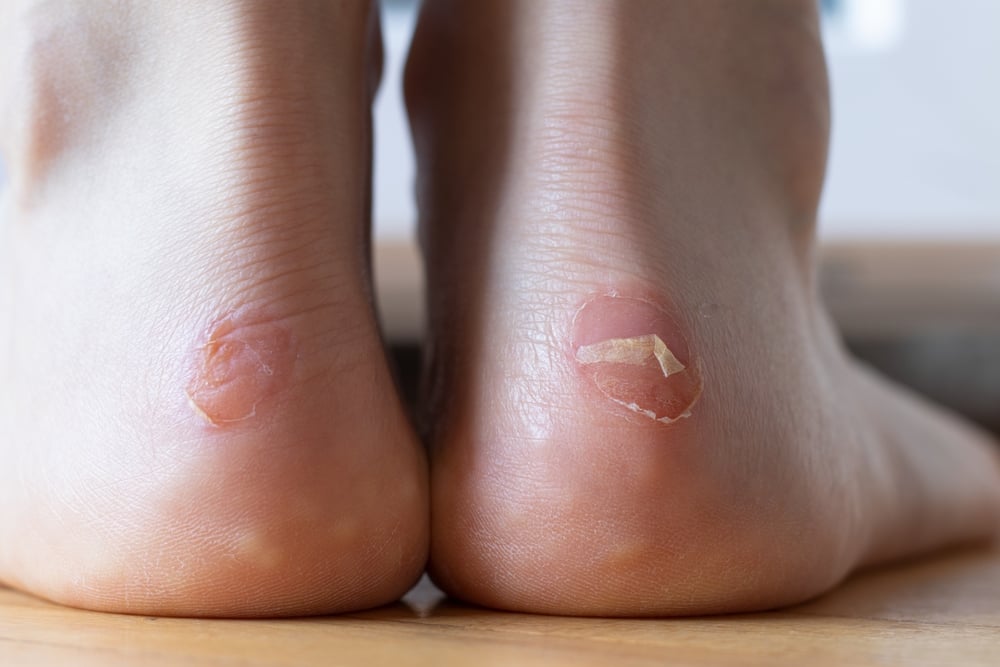
Blisters on the feet are fluid-filled pockets on the skin, commonly caused by friction from ill-fitting shoes or prolonged moisture and pressure. They form to protect the underlying skin from further damage. They can break and leave a painful surface level wound that needs to be properly cared for to prevent further damage and infection.

A foot blister is a small, fluid-filled pocket that develops when friction or shear forces cause the outer layer of skin (epidermis) to separate from the deeper layers beneath.

These friction blisters most commonly form where your skin repeatedly rubs against shoes, socks, or bony prominences like heels and toes. The clear, plasma-like fluid inside cushions and protects underlying tissue while your skin heals.

Understanding what causes a blister on a foot helps guide proper treatment—treating blisters on your feet effectively requires preserving the protective roof whenever possible, as its removal speeds healing and reduces infection risk for most blisters on your feet.

What Causes Blisters On Your Feet?

While friction remains the primary culprit behind most foot blisters, several mechanical and environmental factors work together to create the conditions necessary for skin separation.

Friction: The Most Common Culprit

While friction remains the leading cause of foot blisters, you’ll encounter several other triggers that can create these painful, fluid-filled lesions.

Blisters on your feet are often caused by friction from rubbing between your skin, socks, and shoes, leading to fluid-filled pockets that cushion the area. You can prevent them by wearing well-fitting shoes and moisture-wicking socks to reduce rubbing and heat. If you get a blister, leave it unpopped to heal naturally, keeping it clean and protected with a bandage.

Burns from hot surfaces or prolonged sun exposure can damage skin layers and form blisters. At the same time, contact dermatitis from chemicals or allergic reactions to materials in your shoes may produce similar results.

Additionally, underlying medical conditions like diabetes or eczema, along with fungal infections, can compromise your skin’s integrity and increase blister formation risk.

Shielding your feet from burns matters because sunburnt skin can blister within hours after intense UV exposure, signalling a superficial second-degree injury.

Unlike friction, UV/thermal damage separates skin layers, creating a painful blister on the foot that may be clear or blood‑filled.

Don’t pop a sunburn blister; protect the roof, reduce pain, and prevent infection when treating blisters on your feet.

Contact dermatitis transforms ordinary footwear into a source of painful, itchy blisters that can appear within minutes of exposure to problematic materials.

Unlike friction blisters, allergic reactions create red, scaly patches with fluid-filled lesions in contact areas—around straps, toeboxes, or heels.

Common Allergens Found In
Formaldehyde resins
Shoe adhesives
Chromates
Leather tanning
Rubber accelerators
Shoe soles
Nickel
Buckles / eyelets

You’ll need patch testing to identify specific triggers. Treatment involves removing offending shoe materials, applying topical corticosteroids, and using emollients. Severe reactions may require oral steroids.

Although friction represents the most common cause of foot blisters, underlying medical conditions like diabetes and eczema can dramatically alter how these lesions develop, heal, and respond to treatment.

diabetes diabetic foot
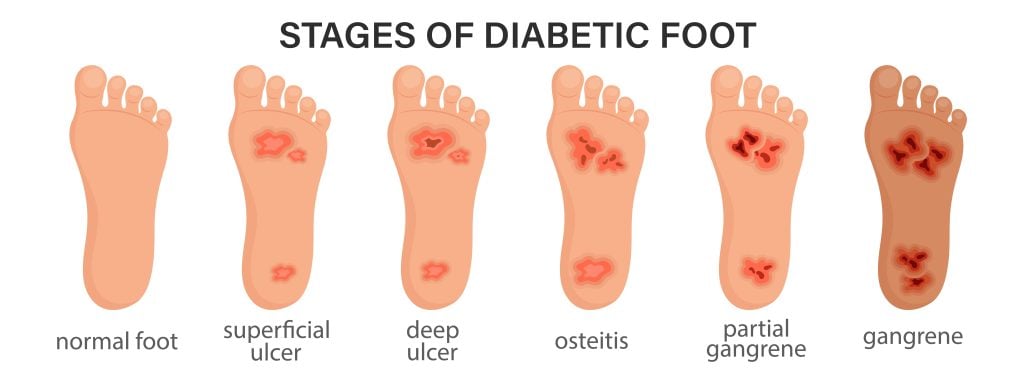
Blisters on diabetic feet are a serious complication, even if painless, as they can go unnoticed and become infected, leading to ulcers, gangrene, or even amputation.

If you have diabetes, peripheral neuropathy may mask blister pain, while impaired circulation increases infection risk and delays healing. Enhanced foot care becomes critical—inspect your feet daily and seek prompt treatment for any concerning changes.

Eczema, particularly dyshidrotic eczema, creates inflammatory vesicles that mimic friction blisters but require different management approaches. These conditions demand specialised prevention strategies and careful monitoring to prevent serious complications.

Spot the impostor: while friction causes most foot blisters, vesiculobullous tinea pedis—a dermatophyte infection—can mimic them with clusters of small, itchy vesicles or bullae on the soles and between toes, often with scaling or maceration.

Suspect tinea pedis when you notice grouped, recurrent “fungal blisters“, itch, and failure to improve after changing shoes.

To Pop or Not to Pop a Blister? A Podiatrist's Advice

The age-old question of whether to pop a blister doesn’t have a simple yes-or-no answer—it depends on the blister’s size, location, and your individual health status.

Generally, leave intact blisters alone—the roof provides natural protection against infection.

If a blister is very large and painful, you can drain it at home by cleaning the area, sterilizing a needle, making a small puncture to release the fluid, and then covering the area with a dressing. However, if you are unsure or have concerns about infection, you should consult a podiatrist.

However, large, painful blisters may require draining using proper technique: sterilise a needle with alcohol, pierce near the edge, and gently express fluid while preserving the skin roof.

If you have diabetes or circulation problems, avoid self-treatment and seek podiatry care immediately, as complications can develop rapidly in these conditions.

How to Treat a Torn or Deroofed Blister

If your blister has torn or lost its protective roof, you’ll need to modify your treatment approach to protect the exposed raw tissue underneath:

What About Blood Blisters?

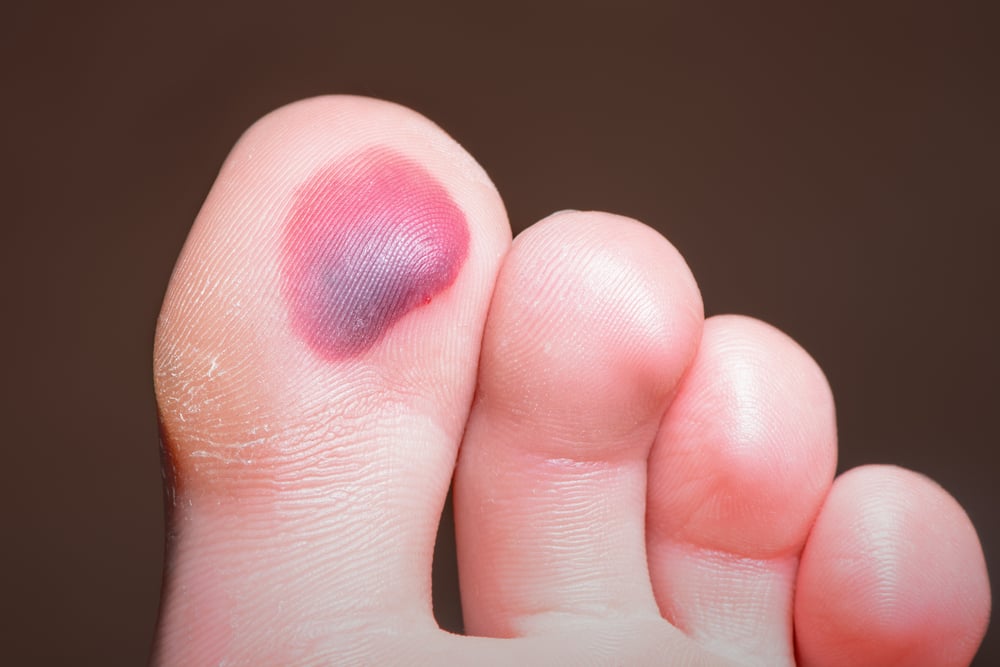
A blood blister on the toe is a sac of blood that forms from damage to underlying blood vessels, often due to friction from ill-fitting shoes or prolonged pressure. If the blister is extremely painful, looks infected (red, hot, or filled with pus), or keeps recurring, it is best to see a podiatrist.

Blood blisters occasionally develop when sudden trauma causes bleeding beneath the skin, creating a dark red or purple fluid-filled pocket that differs from typical clear blisters.

Don’t routinely pop a blood blister—the intact roof protects underlying tissue and reduces infection risk. However, if your foot blister becomes extremely painful or tense, you can perform aseptic drainage using a sterilised needle to nick the edge gently, then:

How to Prevent Blisters on Your Feet

You can markedly reduce your risk of developing foot blisters by making strategic choices about footwear, socks, and foot preparation.

Proper shoe fitting, moisture management, and protective barriers form the foundation of effective blister prevention. Breaking in new footwear gradually and addressing high-friction areas before problems develop will keep your feet comfortable during extended activity.

Choosing the Right Footwear and Getting Fitted

Proper footwear selection serves as your first line of defence against friction-induced blisters, requiring attention to both sizing and materials that match your foot’s unique characteristics.

A professional fitting later in the day ensures an accurate shoe fit when your feet are naturally swollen.

Prioritise a toe box with a thumb’s width space and a width that matches your foot shape:

Moisture-wicking socks dramatically reduce blister formation by moving sweat away from your skin’s surface, preventing the maceration that makes tissue vulnerable to friction-induced separation. Choose merino wool, bamboo, or technical synthetic blends over cotton, which retains moisture. Studies show moisture-wicking socks substantially cut blister incidence during long runs and hikes.

Moisture-wicking socks are athletic or performance socks made from materials like polyester, nylon, or Merino wool that draw sweat away from the skin and to the outer surface of the fabric, where it can evaporate quickly. Unlike traditional cotton socks, which trap moisture, moisture-wicking socks keep feet dry, helping to prevent blisters, foot odor, and the growth of bacteria and fungi.

Consider double-socking—a thin liner under a thicker outer sock—to reduce friction between skin and shoe. For enhanced sweat management, use antiperspirant foot sprays and change socks during extended activities. Select seamless socks with targeted cushioning and proper thickness to avoid pressure points that negate moisture-wicking benefits.

Strategic application of protective barriers can dramatically reduce your risk of developing foot blisters during physical activities. These proven methods create effective shields against friction and moisture:

For maximum protection, combine a double-sock system with these barriers, especially during high-risk activities or when breaking in new footwear.

Breaking in new footwear gradually prevents the majority of friction-related blisters that occur during the initial wear period:

When to See a Podiatrist for a Blister

diabetic foot podiatry
See a podiatrist for a foot blister if it shows signs of infection (redness, swelling, pus, warmth, or foul odor), if you have diabetes or a compromised immune system, if the blister is unusually large, deep, or not healing, or if you experience recurring blisters, as these can signal underlying issues with your footwear, gait, or foot structure.

While most foot blisters heal with basic home care, certain situations require professional evaluation by a podiatrist.

You should seek medical attention if your blister shows signs of infectionkeeps recurring in the exact location, causes severe pain that impairs walking, or develops in connection with an underlying medical condition.

Prompt professional care guarantees proper treatment and prevents complications that could lead to more serious foot problems.

  • Signs of an Infected Blister

    Although most foot blisters heal without complications, certain warning signs indicate a bacterial infection that requires immediate podiatric evaluation. These symptoms shouldn't be ignored, as infected blisters can lead to serious complications if left untreated.

  • Recurring Blisters in the Same Spot

    When blisters consistently develop in the identical location despite proper footwear changes and preventive measures, you're likely dealing with an underlying biomechanical problem that requires professional evaluation.

  • Blisters Related to a Medical Condition

    Beyond mechanical causes that create repetitive blistering, certain medical conditions markedly increase your risk of developing problematic foot blisters or experiencing serious complications from them, such as diabetes.

  • Blisters That Are Severely Painful or Impair Walking

    If a foot blister causes severe pain that prevents normal walking or weight-bearing, you need prompt podiatric evaluation. Severe pain often indicates a large fluid-filled or blood blister, underlying tissue damage, or biomechanical issues requiring professional intervention.

Professional Blister Treatment at Our Clinic

Our clinic provides all-encompassing blister treatment that goes beyond basic first aid to address both immediate symptoms and underlying causes. We’ll debride surrounding hard skin, assess biomechanical factors like bunions or calcaneal motion, and apply sterile dressings tailored to your specific needs.

Our thorough approach includes:

Summing It All Up...

Foot blisters, while common and often preventable, require proper attention to avoid complications and ensure quick healing. The key to managing blisters effectively lies in prevention through proper footwearmoisture management, and gradual activity progression.

When blisters do occur, appropriate treatment—from leaving small intact blisters alone to sterile drainage of larger ones—can promote healing while minimising infection risk. Individuals with diabetes or those experiencing signs of infection should seek immediate medical attention.

For persistent blister problemsrecurring issues, or concerns about proper treatment, the experienced podiatrists at Bellevue Podiatry are here to provide expert care and personalised solutions to keep your feet healthy and pain-free.

You don’t need to put up with persistent foot blisters any longer.  Our team of Podiatrists have the education and experience to get you moving pain free again.  Take control today by booking in online or call us today on (03) 8104 9270 to get this issue sorted once and for all.

Picture of Bellevue Podiatry

Bellevue Podiatry

Bellevue Podiatry has been serving the people of Rosanna and its surrounding suburbs for over 10 years. We have the qualifications, experience and education to effectively treat any lower limb condition or injury that requires expert podiatry care.

Picture of Nicole Hardidge - Principal Podiatrist

Nicole Hardidge - Principal Podiatrist

Nicole graduated with a Bachelor of Podiatry from Latrobe University in 2009 with a certificate in Advanced Clinical Education. Nicole has completed her post graduate certificate in wound care through Monash University.

If you would like a deeper understanding of the content discussed in this article, please click on the links below: