Blisters on Feet: A Podiatrist's Guide to Causes, Treatment & Blister Prevention

Blog 142 – Blisters on Feet: A Podiatrist’s Guide to Causes, Treatment & Blister Prevention

Those uncomfortable fluid-filled bumps on your feet aren’t just a minor inconvenience—they’re your body’s protective response to tissue damage that can markedly impact your mobility and daily activities.

While you might dismiss foot blisters as a trivial concern, understanding their underlying causes and proper treatment methods can mean the difference between quick healing and potentially serious complications.

What you don’t know about blister formation could put your foot health at unnecessary risk – so let’s explore this and more in our latest blog.

Key Takeaways

What Are Foot Blisters?

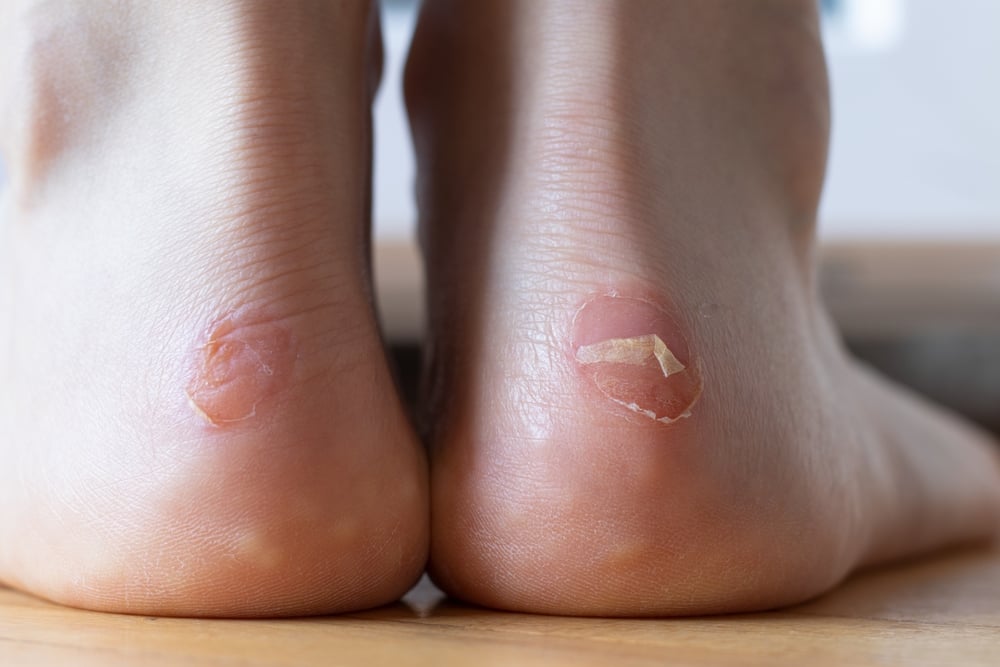
Blisters on the feet are fluid-filled pockets on the skin, commonly caused by friction from ill-fitting shoes or prolonged moisture and pressure. They form to protect the underlying skin from further damage. They can break and leave a painful surface level wound that needs to be properly cared for to prevent further damage and infection.

A foot blister is a small, fluid-filled pocket that develops when friction or shear forces cause the outer layer of skin (epidermis) to separate from the deeper layers beneath.

These friction blisters most commonly form where your skin repeatedly rubs against shoes, socks, or bony prominences like heels and toes. The clear, plasma-like fluid inside cushions and protects underlying tissue while your skin heals.

Understanding what causes a blister on a foot helps guide proper treatment—treating blisters on your feet effectively requires preserving the protective roof whenever possible, as its removal speeds healing and reduces infection risk for most blisters on your feet.

What Causes Blisters On Your Feet?

While friction remains the primary culprit behind most foot blisters, several mechanical and environmental factors work together to create the conditions necessary for skin separation.

Friction: The Most Common Culprit

While friction remains the leading cause of foot blisters, you’ll encounter several other triggers that can create these painful, fluid-filled lesions.

Blisters on your feet are often caused by friction from rubbing between your skin, socks, and shoes, leading to fluid-filled pockets that cushion the area. You can prevent them by wearing well-fitting shoes and moisture-wicking socks to reduce rubbing and heat. If you get a blister, leave it unpopped to heal naturally, keeping it clean and protected with a bandage.

Burns from hot surfaces or prolonged sun exposure can damage skin layers and form blisters. At the same time, contact dermatitis from chemicals or allergic reactions to materials in your shoes may produce similar results.

Additionally, underlying medical conditions like diabetes or eczema, along with fungal infections, can compromise your skin’s integrity and increase blister formation risk.

Shielding your feet from burns matters because sunburnt skin can blister within hours after intense UV exposure, signalling a superficial second-degree injury.

Unlike friction, UV/thermal damage separates skin layers, creating a painful blister on the foot that may be clear or blood‑filled.

Don’t pop a sunburn blister; protect the roof, reduce pain, and prevent infection when treating blisters on your feet.

Contact dermatitis transforms ordinary footwear into a source of painful, itchy blisters that can appear within minutes of exposure to problematic materials.

Unlike friction blisters, allergic reactions create red, scaly patches with fluid-filled lesions in contact areas—around straps, toeboxes, or heels.

Common Allergens Found In
Formaldehyde resins
Shoe adhesives
Chromates
Leather tanning
Rubber accelerators
Shoe soles
Nickel
Buckles / eyelets

You’ll need patch testing to identify specific triggers. Treatment involves removing offending shoe materials, applying topical corticosteroids, and using emollients. Severe reactions may require oral steroids.

Although friction represents the most common cause of foot blisters, underlying medical conditions like diabetes and eczema can dramatically alter how these lesions develop, heal, and respond to treatment.

diabetes diabetic foot
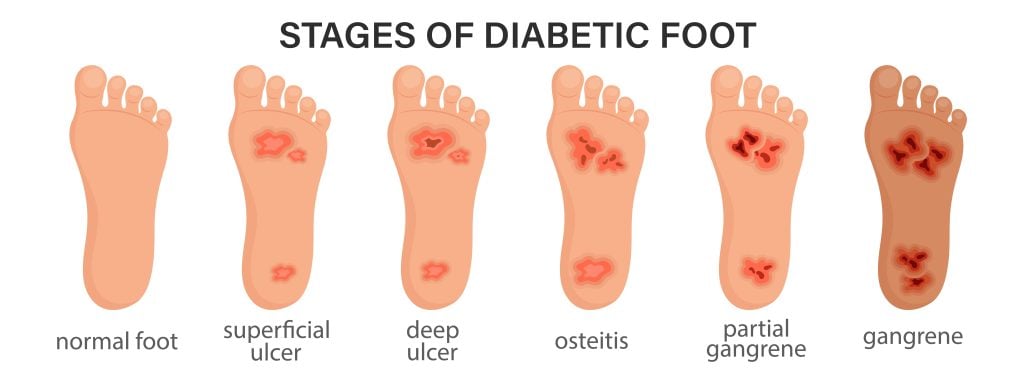
Blisters on diabetic feet are a serious complication, even if painless, as they can go unnoticed and become infected, leading to ulcers, gangrene, or even amputation.

If you have diabetes, peripheral neuropathy may mask blister pain, while impaired circulation increases infection risk and delays healing. Enhanced foot care becomes critical—inspect your feet daily and seek prompt treatment for any concerning changes.

Eczema, particularly dyshidrotic eczema, creates inflammatory vesicles that mimic friction blisters but require different management approaches. These conditions demand specialised prevention strategies and careful monitoring to prevent serious complications.

Spot the impostor: while friction causes most foot blisters, vesiculobullous tinea pedis—a dermatophyte infection—can mimic them with clusters of small, itchy vesicles or bullae on the soles and between toes, often with scaling or maceration.

Suspect tinea pedis when you notice grouped, recurrent “fungal blisters“, itch, and failure to improve after changing shoes.

To Pop or Not to Pop a Blister? A Podiatrist's Advice

The age-old question of whether to pop a blister doesn’t have a simple yes-or-no answer—it depends on the blister’s size, location, and your individual health status.

Generally, leave intact blisters alone—the roof provides natural protection against infection.

If a blister is very large and painful, you can drain it at home by cleaning the area, sterilizing a needle, making a small puncture to release the fluid, and then covering the area with a dressing. However, if you are unsure or have concerns about infection, you should consult a podiatrist.

However, large, painful blisters may require draining using proper technique: sterilise a needle with alcohol, pierce near the edge, and gently express fluid while preserving the skin roof.

If you have diabetes or circulation problems, avoid self-treatment and seek podiatry care immediately, as complications can develop rapidly in these conditions.

How to Treat a Torn or Deroofed Blister

If your blister has torn or lost its protective roof, you’ll need to modify your treatment approach to protect the exposed raw tissue underneath:

What About Blood Blisters?

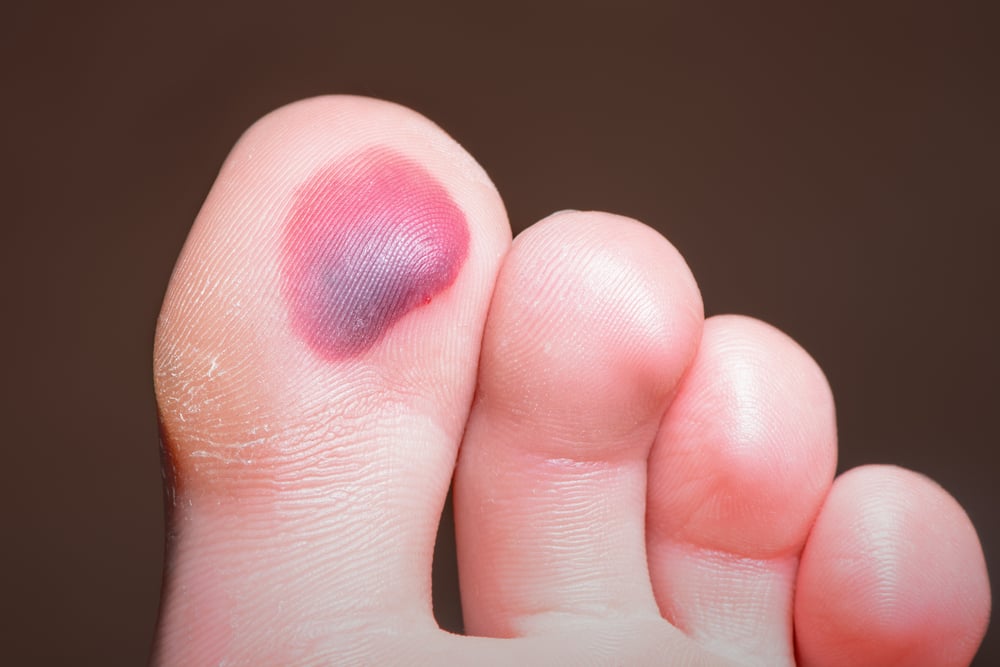
A blood blister on the toe is a sac of blood that forms from damage to underlying blood vessels, often due to friction from ill-fitting shoes or prolonged pressure. If the blister is extremely painful, looks infected (red, hot, or filled with pus), or keeps recurring, it is best to see a podiatrist.

Blood blisters occasionally develop when sudden trauma causes bleeding beneath the skin, creating a dark red or purple fluid-filled pocket that differs from typical clear blisters.

Don’t routinely pop a blood blister—the intact roof protects underlying tissue and reduces infection risk. However, if your foot blister becomes extremely painful or tense, you can perform aseptic drainage using a sterilised needle to nick the edge gently, then:

How to Prevent Blisters on Your Feet

You can markedly reduce your risk of developing foot blisters by making strategic choices about footwear, socks, and foot preparation.

Proper shoe fitting, moisture management, and protective barriers form the foundation of effective blister prevention. Breaking in new footwear gradually and addressing high-friction areas before problems develop will keep your feet comfortable during extended activity.

Choosing the Right Footwear and Getting Fitted

Proper footwear selection serves as your first line of defence against friction-induced blisters, requiring attention to both sizing and materials that match your foot’s unique characteristics.

A professional fitting later in the day ensures an accurate shoe fit when your feet are naturally swollen.

Prioritise a toe box with a thumb’s width space and a width that matches your foot shape:

Moisture-wicking socks dramatically reduce blister formation by moving sweat away from your skin’s surface, preventing the maceration that makes tissue vulnerable to friction-induced separation. Choose merino wool, bamboo, or technical synthetic blends over cotton, which retains moisture. Studies show moisture-wicking socks substantially cut blister incidence during long runs and hikes.

Moisture-wicking socks are athletic or performance socks made from materials like polyester, nylon, or Merino wool that draw sweat away from the skin and to the outer surface of the fabric, where it can evaporate quickly. Unlike traditional cotton socks, which trap moisture, moisture-wicking socks keep feet dry, helping to prevent blisters, foot odor, and the growth of bacteria and fungi.

Consider double-socking—a thin liner under a thicker outer sock—to reduce friction between skin and shoe. For enhanced sweat management, use antiperspirant foot sprays and change socks during extended activities. Select seamless socks with targeted cushioning and proper thickness to avoid pressure points that negate moisture-wicking benefits.

Strategic application of protective barriers can dramatically reduce your risk of developing foot blisters during physical activities. These proven methods create effective shields against friction and moisture:

For maximum protection, combine a double-sock system with these barriers, especially during high-risk activities or when breaking in new footwear.

Breaking in new footwear gradually prevents the majority of friction-related blisters that occur during the initial wear period:

When to See a Podiatrist for a Blister

diabetic foot podiatry
See a podiatrist for a foot blister if it shows signs of infection (redness, swelling, pus, warmth, or foul odor), if you have diabetes or a compromised immune system, if the blister is unusually large, deep, or not healing, or if you experience recurring blisters, as these can signal underlying issues with your footwear, gait, or foot structure.

While most foot blisters heal with basic home care, certain situations require professional evaluation by a podiatrist.

You should seek medical attention if your blister shows signs of infectionkeeps recurring in the exact location, causes severe pain that impairs walking, or develops in connection with an underlying medical condition.

Prompt professional care guarantees proper treatment and prevents complications that could lead to more serious foot problems.

  • Signs of an Infected Blister

    Although most foot blisters heal without complications, certain warning signs indicate a bacterial infection that requires immediate podiatric evaluation. These symptoms shouldn't be ignored, as infected blisters can lead to serious complications if left untreated.

  • Recurring Blisters in the Same Spot

    When blisters consistently develop in the identical location despite proper footwear changes and preventive measures, you're likely dealing with an underlying biomechanical problem that requires professional evaluation.

  • Blisters Related to a Medical Condition

    Beyond mechanical causes that create repetitive blistering, certain medical conditions markedly increase your risk of developing problematic foot blisters or experiencing serious complications from them, such as diabetes.

  • Blisters That Are Severely Painful or Impair Walking

    If a foot blister causes severe pain that prevents normal walking or weight-bearing, you need prompt podiatric evaluation. Severe pain often indicates a large fluid-filled or blood blister, underlying tissue damage, or biomechanical issues requiring professional intervention.

Professional Blister Treatment at Our Clinic

Our clinic provides all-encompassing blister treatment that goes beyond basic first aid to address both immediate symptoms and underlying causes. We’ll debride surrounding hard skin, assess biomechanical factors like bunions or calcaneal motion, and apply sterile dressings tailored to your specific needs.

Our thorough approach includes:

Summing It All Up...

Foot blisters, while common and often preventable, require proper attention to avoid complications and ensure quick healing. The key to managing blisters effectively lies in prevention through proper footwearmoisture management, and gradual activity progression.

When blisters do occur, appropriate treatment—from leaving small intact blisters alone to sterile drainage of larger ones—can promote healing while minimising infection risk. Individuals with diabetes or those experiencing signs of infection should seek immediate medical attention.

For persistent blister problemsrecurring issues, or concerns about proper treatment, the experienced podiatrists at Bellevue Podiatry are here to provide expert care and personalised solutions to keep your feet healthy and pain-free.

You don’t need to put up with persistent foot blisters any longer.  Our team of Podiatrists have the education and experience to get you moving pain free again.  Take control today by booking in online or call us today on (03) 8104 9270 to get this issue sorted once and for all.

Picture of Bellevue Podiatry

Bellevue Podiatry

Bellevue Podiatry has been serving the people of Rosanna and its surrounding suburbs for over 10 years. We have the qualifications, experience and education to effectively treat any lower limb condition or injury that requires expert podiatry care.

Picture of Nicole Hardidge - Principal Podiatrist

Nicole Hardidge - Principal Podiatrist

Nicole graduated with a Bachelor of Podiatry from Latrobe University in 2009 with a certificate in Advanced Clinical Education. Nicole has completed her post graduate certificate in wound care through Monash University.

If you would like a deeper understanding of the content discussed in this article, please click on the links below: